The startup failure story founders complain about at conferences usually misses the mark.
The conference version always has a villain: bad timing, a market that wasn’t ready, a funding environment that went cold. The real version is usually more embarrassing, and the common culprit is time allocation. Often, teams spent 18 months fixing the wrong thing, felt productive the whole time, and only understood what went wrong when it was too late.
This is where most seed-stage companies quietly die, in a slow, expensive loop of busywork that doesn’t change anything. Only 20% of companies that raised seed rounds in 2022 had progressed beyond seed within two years, down from between 51% and 61% in prior years. The funding environment takes the lion’s share of blame for that drop. While it deserves some of it, a lot of those companies didn’t run out of money; rather, they spent too much time solving the wrong problem.
Table of Contents
Companies Raise Seed, then Drift into an 18-Month Chasm
Here’s a classic pattern founders struggle with: A B2B SaaS team raises seed and starts selling to mid-market HR departments, but by month nine, conversion rates are low. The pitch had been tightened for HR practitioners, experts who lived inside the problem every day and understood the value-add immediately. Everyone left the calls excited.
Every deal required a CFO's signature, and HR managers bringing the concept upstairs were working with materials designed for a more technical audience. The sales team had focused too much on difficult details and made too many assumptions about leadership’s familiarity with the problem. As a result, it didn’t translate to the executive, and the deal fell flat.
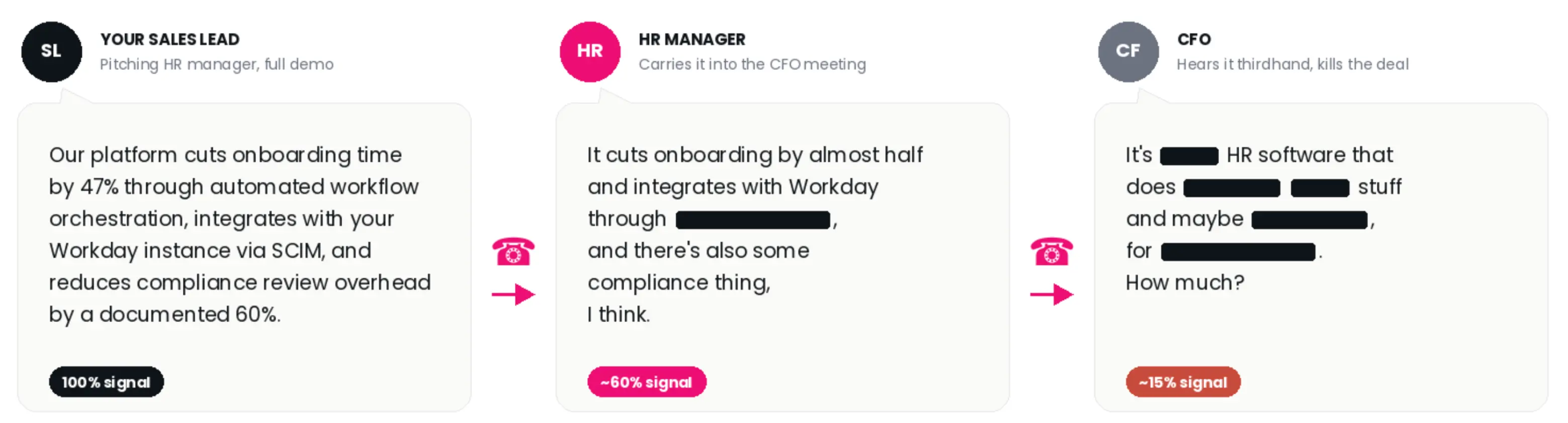
The team had made their champion responsible for translating a pitch that was never intended to travel. Step by step, the SaaS company implemented what felt like obvious fixes, bringing in a stronger sales lead, tightening pricing, and rebuilding onboarding. Eighteen months in, they’ve turned the organization upside down, bleeding precious capital, and the numbers have barely moved.
The real problem was a snowball nobody spotted: language that grew more sophisticated with every iteration, moving farther and farther from the people who actually controlled the budget.
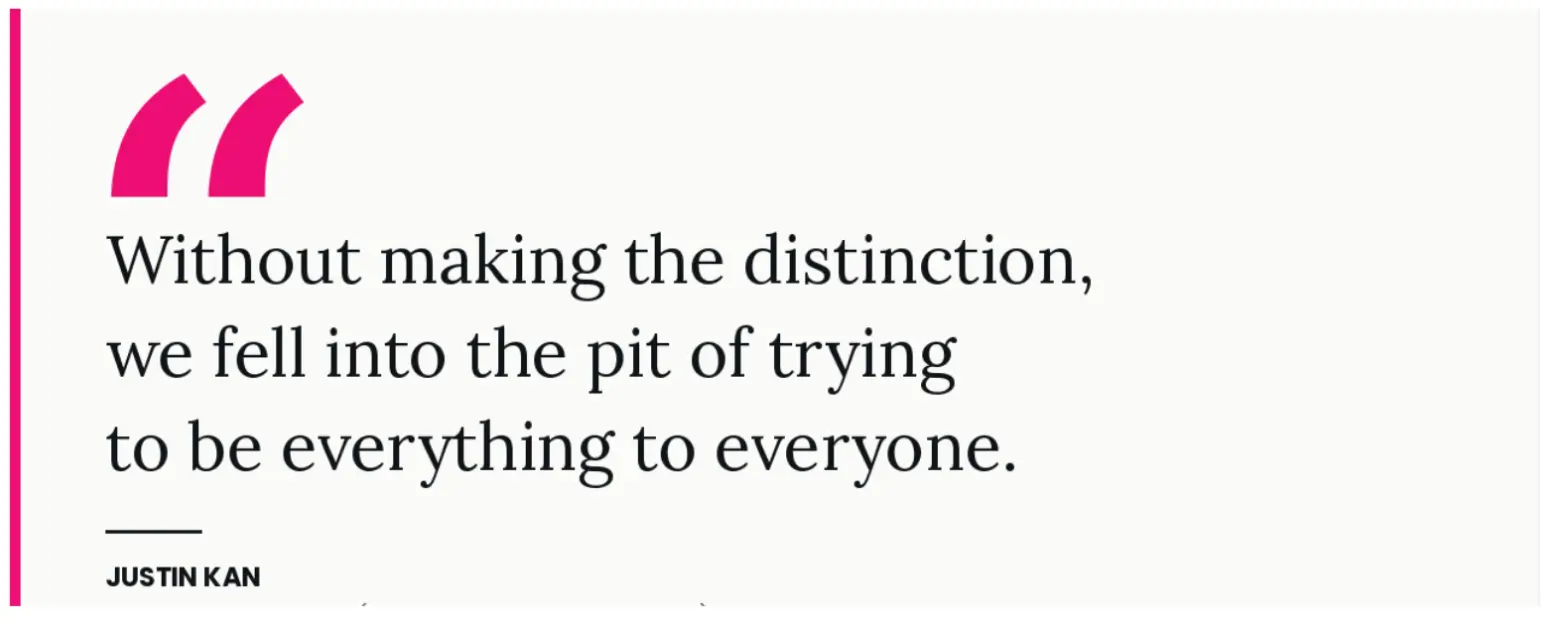
Justin Kan, who co-founded Justin.tv, which became Twitch and sold for $970 million, described a version of this in his own post-mortem after burning through $75 million at Atrium, his legal tech startup. His team kept changing things without ever resolving the underlying question: were they building for lawyers or for startup clients buying legal services?
You’re Doing the Wrong Things Because You Focus on the Wrong Signals
Once you’ve raised, the new people watching change the picture entirely.
The pressure to show progress compounds quickly, and this progress has a designated look: new hires, product updates, and a sharper pitch deck. While these things photograph well, spending two weeks quietly reconsidering your entire core audience does not.
Internal go-to-market issues, not external conditions, account for a significant share of seed-to-Series A failures, which consistently surprises founders who’ve been blaming the market. The problem tends to be internal and more foundational than most founders want to admit.
There’s also the confidence factor: Getting a seed round means you have already convinced smart people that your thesis is right. If they believe in the mission, it’s easy to ignore early signals that the thesis needs adjusting, because you’ve already sold it.
The Solution: Define Clear Failure Metrics Early
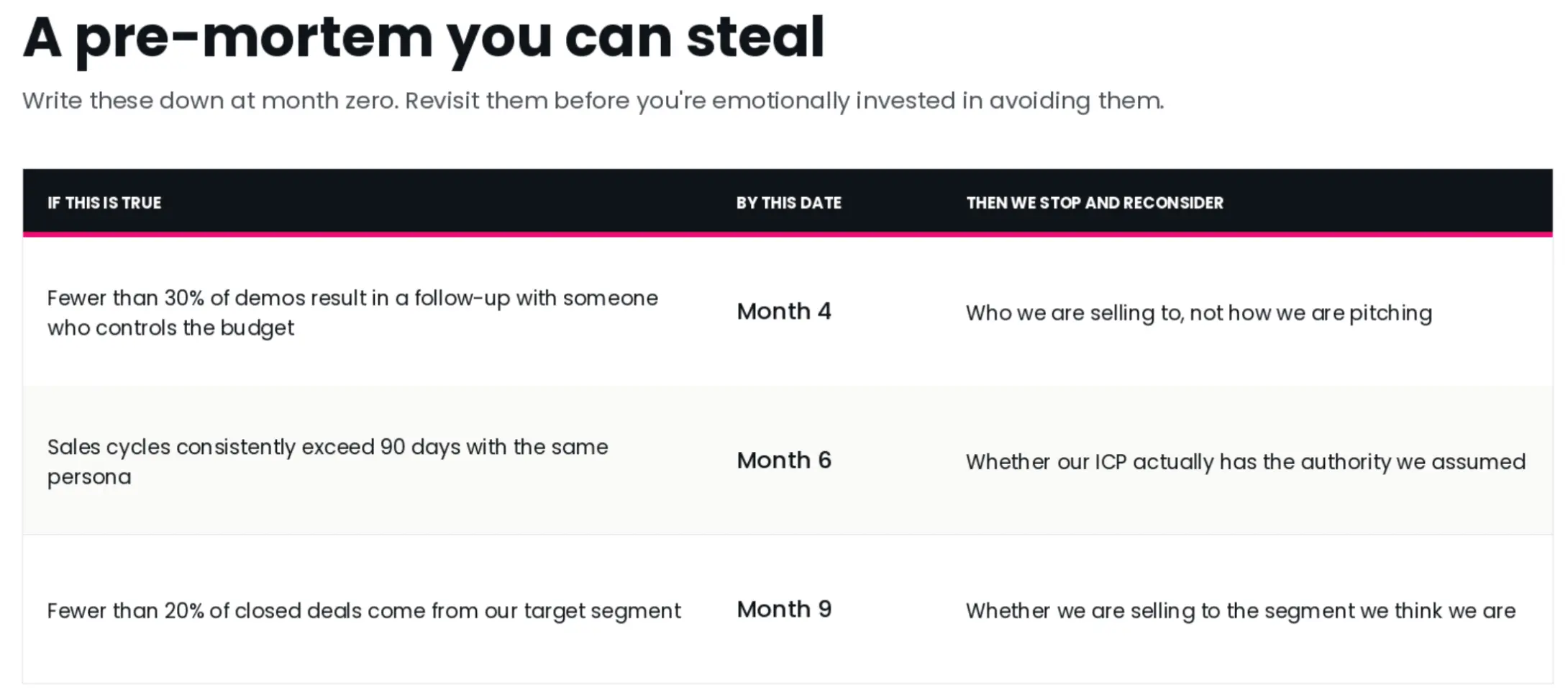
Founders who catch fundamental flaws early tend to have made one crucial step at the beginning: they decided what failure would look like before they were emotionally invested in avoiding it. Specifically, they wrote down what would have to be true at month three or four for them to question the whole premise, not just the tactics.
Most teams set targets, but far fewer set the conditions under which they’d stop and ask whether the entire premise is pointing in the right direction. When a number is bad, and you have pre-agreed criteria for what “bad” means, the conversation becomes much cleaner. For example, if fewer than 30% of our demos result in a follow-up with someone who controls the budget, you stop optimizing the pitch and revisit who you're selling to. Without that framework, teams tend to default to changing tactics because it feels like the most direct action they can take.
This kind of clarity tends to develop more quickly in environments where you’re watching multiple early-stage products move through the same period. Seeing five teams hit the same wall at once helps you get faster at recognizing whether the problem is tactical or foundational. It's one reason startup studios, which are built around shared execution infrastructure across multiple ventures, tend to develop this diagnostic muscle earlier than solo-founder teams.
Most teams won’t have that vantage point, but defining failure in advance doesn’t require it. It just requires the discipline, bravery, and humility to ask, before you’re nine months in and in the pressure cooker.
The founders who bridge the chasm don’t need the best product, but the willingness to do the unglamorous work, whether it’s sitting with an uncomfortable question instead of shipping a fix, or restarting something that isn't working instead of dressing it up for the next investor update. While that rarely feels right in the moment, it's usually the one that matters.
About the author
Ashton Edmeades is a brand and marketing strategist who has spent the last five years launching startups across AI, commercial real estate, green tech, and emergency communications. He’s currently launching Rival.io, an AI infrastructure platform, and previously worked at a startup accelerator where he helped build Mission Timber, the brand behind Ascent in Milwaukee, the tallest timber tower in the world. He’s fascinated by company building: the models, structures, and decisions that shape whether a startup survives or thrives.






![12 Best Startup Financial Model Templates [Free & Paid]](https://d1pnnwteuly8z3.cloudfront.net/images/177302d9-3657-45b7-ac9d-acf801d83a74/019fadd2-2388-77a4-a43e-6c44f536d546.jpg)