Let's say you've been grinding on your startup longer than you care to admit. Maybe you raised a solid pre-seed round, established product-market fit, and now you're staring down a Series A. Someone on your cap table keeps telling you to relocate to San Francisco. Your co-founder is eyeing Austin. But here's the thing: you most likely don't need to leave Canada to build your startup business.
In most Canadian cities for startups, $2M CAD in seed funding stretches like $4M USD in the Bay Area. The market's smaller, sure. The capital density isn't SF. But if you're building for the long haul or looking for technical expertise, there are plenty of investors in Canada for startups to raise capital from. Canada's startup ecosystem offers real advantages, especially for founders who prioritize sustainable growth over hype cycles.
Some of you may be considering immigrating to Canada. Others may be looking to relocate to a neighboring city for a more favorable VC environment. Whatever your case may be, here are six cities that represent the best startup cities in Canada right now. This won't be tourism propaganda or aspirational thinking. We'll give a sneak peek into both the funding landscape as well as the high quality of life for each location.
Alright, let's begin.
#1. Toronto, ON

Toronto is the clear heavyweight. It's the only Canadian city that can genuinely stand toe-to-toe with tier-one US hubs when it comes to capital density, talent depth, and ecosystem maturity. As a major player in Canada's tech landscape, Toronto has established itself as a top destination for startups and established companies alike. On OpenVC, we have over 140 investors based in Toronto, including VC firms, angel networks, family offices, and more.
If you're building a startup in Canada and need access to everything (investors, operators, customers, innovation), Toronto is obviously the default answer.
Highlights
- Deepest VC ecosystem in Canada
- Financial capital of Canada
- Most diverse city in North America
- MaRS, DMZ, and CDL provide world-class infrastructure
Why Toronto Works for Tech Startups
Toronto's investor ecosystem is the most developed in the country. OMERS Ventures, Georgian Partners, and Inovia all call Toronto home, and they're writing real checks. US funds like Bessemer, Insight, and Tiger Global have also set up shop here because the deal flow justifies it. Canadian VCs and international firms both recognize Toronto's position among the top cities in the global startup ecosystem. You can actually get a competitive Series A done without flying to Sand Hill Road, which matters more than founders realize when you're trying to maintain momentum.
The fintech scene is real. Toronto sits at the center of Canada's financial services industry, which means you've got both the infrastructure (banks, payment rails, regulatory expertise) and the talent (risk analysts, compliance operators, product managers who've shipped at scale). The proximity to the Toronto Stock Exchange and Bay Street creates unique advantages for fintech founders. Wealthsimple is the obvious example, but Nuvei, Neo Financial, and Borrowell all emerged from "The 6". If you're building anything in payments, lending, wealth management, or embedded finance, Toronto gives you a true home-field advantage.
The talent pool is world-class. University of Toronto produces cutting-edge AI research, Rotman cranks out operators and product leaders, and the Waterloo pipeline feeds Toronto with technical talent that's already been vetted through co-op placements. Toronto Metropolitan University (formerly Ryerson) also contributes to the growing tech scene through programs like the DMZ incubator. The immigration factor is massive. Over 50% of Toronto's population is foreign-born, which means you can recruit top talent globally without the H1B lottery. The Canadian government's Startup Visa Program makes it easier for immigrant founders to establish themselves here compared to the US.
But let's be honest about the tradeoffs. Housing isn't cheap. A one-bedroom condo that would rent for $1,500 in Denver costs double in Toronto. Salaries are lower than SF, but not low enough to offset the cost of living. And we're talking about Canada, so if you're new, be prepared for a rough winter (to say the least).
Toronto is a truly global city. The food scene rivals New York, the cultural diversity is unmatched, and there's a depth of community here that's hard to find elsewhere. The thriving tech community and regular startup events create networking opportunities that support startup growth. But you pay for it in cost, congestion, and the occasional reminder that you're still not in the center of the universe when it comes to venture capital.
We've got over 70 investors in Vancouver in our database, including VCs, angel investors, PE funds, and more! Explore their profiles, create a shortlist, and start your outreach to Vancouver investors today!
#2. Vancouver, BC

Vancouver is on a mission to build the next tech frontier. It's an up-and-coming destination, with Wanderlust recently naming it the fifth most desirable city in the entire world !
As one of the best Canadian cities for startups, Vancouver combines access to global tech markets with an unmatched quality of life. Founders here ski on Saturdays, ship features on Sundays. But paradise isn't cheap, and the investor ecosystem still lags behind Toronto's density.
Highlights
- Gateway to Asia-Pacific markets (gaming, fintech, cross-border commerce)
- Climate tech and cleantech hub
- Gaming industry maturity creates world-class product and engineering talent
- Outdoor lifestyle at the center of everything
Why Vancouver Works for Tech Startups
Vancouver is positioned as the bridge to the Asia-Pacific. The time zone overlap with Asian markets is real (you can actually take calls with Singapore and Tokyo during business hours), the cultural and trade relationships run deep, and Vancouver has become the de facto North American tech hub for companies expanding into China, Japan, and Southeast Asia. If you're building anything in gaming, fintech, or cross-border commerce where Asia matters, Vancouver gives you a network that nowhere else in Canada can match.
The cleantech and climate tech startup ecosystems are booming. Carbon Engineering (backed by Bill Gates, now acquired by Occidental) proved that hard science and deep tech can scale out of Vancouver. General Fusion is building commercial nuclear fusion reactors. Saltworks is tackling industrial water treatment. The combination of UBC's research capabilities, proximity to natural resources, and a culture that actually cares about environmental outcomes creates a unique advantage for founders in this space. Vancouver has emerged as an innovation hub for high-potential tech companies tackling climate challenges.
EA, Relic Entertainment, and a massive indie scene have created a tech talent pool that understands how to build complex, engaging products at scale. If you're building consumer products, social apps, or anything requiring high-quality design and engineering craft, Vancouver has ample expertise and talent awaiting you.
The investor ecosystem is growing, but it hasn't matured fully. Yaletown Ventures, Vanedge Capital, and BDC have a presence. The density isn't Toronto's, but it's starting to bump up a tier. Entrepreneurs based in Vancouver also often explore startup funding opportunities in nearby cities, including investors in Seattle.
When it comes to real-life considerations, housing costs aren't great, unfortunately. The "No Fun City" reputation has softened (the restaurant scene is excellent now), but liquor laws are still restrictive and the nightlife shuts down early. If your team is coming from somewhere like NYC, it might feel a bit too slow.
But the outdoor access is unmatched in North America. You can be on a mountain bike trail in 20 minutes, skiing at Whistler in 90, or hiking in the rainforest in less time than it takes to sit in Bay Area traffic. The winters are mild, the summers are perfect, and the ocean-mountain combination creates a quality of life that's genuinely hard to replicate. For founders seeking cities for startups and entrepreneurs that prioritize work-life balance, Vancouver is among the top choices.
Find your ideal investors now
Browse 16,000+ investors, share your pitch deck, and manage replies - all for free.
Get Started Now
#3. Montreal, QC

Montreal is a wildcard. It's absurdly cheap, home to world-class AI talent, and has a cultural energy that makes Toronto feel corporate and Vancouver feel sleepy. But the language laws are interesting to say the least. Taxes can be complicated. And if you only speak English, you'll hit friction that other cities in Canada don't create. Montreal isn't for everyone. But for the right founder, it's a massive competitive advantage.
Highlights
- Undisputed AI capital
- Cost of living is half of Toronto
- Deep pool of engineering and creative talent
- European culture without leaving North America
Why Montreal Works for Tech Startups
Montreal has tangible AI innovation. Yoshua Bengio literally won the Turing Award for deep learning research. Mila is one of the top AI research labs globally. Element AI may have been acquired for less than its peak valuation, but it created a diaspora of talent and operators who are now building the next generation of AI companies.
Scale AI's recent $200M+ funding and its position as a Canadian startup champion show that the ecosystem can produce follow-on successes. If you're building in machine learning, computer vision, NLP, or AI infrastructure, Montreal gives you access to researchers and engineers that you simply can't hire anywhere else among cities in Canada. The startup culture here centers on deep tech and innovative tech solutions.
McGill and Concordia are strong universities, but the real talent story is the bilingual factor. Montreal is the only major Canadian city where you can legitimately build a team that operates in both English and French, which opens up European markets and francophone talent pools that Toronto and Vancouver can't access as easily.
Now the hard part. Bill 96 and Quebec's language laws can be concerning. Depending on your company size, you may be required to operate in French, provide French documentation, and communicate with employees in French. Many startups navigate this by keeping headcount under certain thresholds or operating primarily in English internally while maintaining French compliance externally. But it's friction, and it's real. If you're uncomfortable with ambiguity or want a straightforward regulatory environment for startups, Montreal will frustrate you.
Additionally, the tax situation is complex. You're paying Quebec provincial taxes on top of federal taxes, and the combined rate is higher than Ontario or BC. However, the R&D tax credits are generous, and the lower cost of living often offsets the higher tax burden.
Montreal is the right choice if you're building in AI, if you're comfortable with bilingual operations, or if you value creative energy and low costs over regulatory simplicity. It's not the easy choice. But it might be the smart one for the best startup founders focused on deep research.
If you want to get a head start on fundraising here, check out our Montreal investor list.
#4. Waterloo, ON
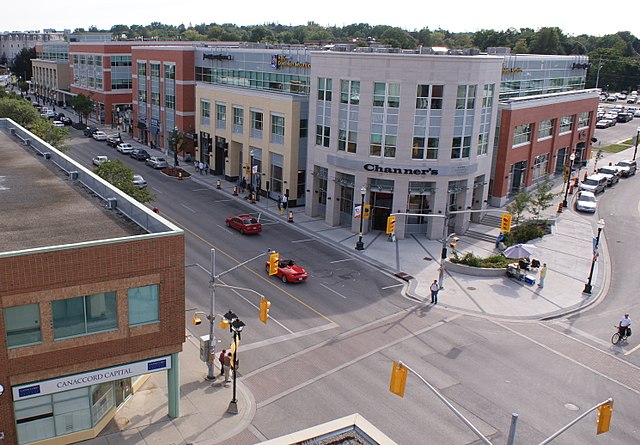
Waterloo is a college town of 100,000 people that happens to produce billion-dollar companies. It punches wildly above its weight, and the reason is simple: the University of Waterloo's co-op program creates a talent pipeline that no other Canadian city can replicate. If you're a deeply technical founder who values focus over flash, Waterloo might be exactly what you need.
Highlights
- University of Waterloo produces top tech talent
- The "Canadian MIT"
- Velocity and Communitech's startup infrastructure
- Toronto is 90 minutes away for big-city resources
Why Waterloo Works for Tech Startups
The University of Waterloo's co-op education is the entire story. Over 6,000 students cycle through tech co-ops every term, which means you have access to a constant stream of students with actual work experience. They've probably shipped code at Stripe, built features at Shopify, and done rotations at Google and Apple. By the time they graduate, they've worked 2+ years in real jobs.
This is obviously much more than an internship program. You're getting a professional training system disguised as a university education. The technical culture is very deep. Waterloo has an outstanding reputation because it's earned it through computer science, engineering, and math programs that are world-class. The environment for startups here is uniquely focused on technical depth and engineering excellence.
Velocity is one of the most effective university-linked incubators in the world. It's not flashy, but it's structured, well-funded, and has produced companies like Kik, Thalmic Labs (now North, acquired by Google), and a steady stream of technical founders who go on to raise meaningful rounds. Communitech provides co-working space, programming, and connections to later-stage operators. The Lazaridis Institute at Wilfrid Laurier focuses on startup ecosystem development and brings in experienced mentors and corporate partnerships. These startup support organizations create a foundation for successful startup launches.
Let's be clear about what Waterloo isn't. It's not glamorous. It's mellow and weekends are quiet. If your team needs creative energy, cultural vibrancy, or a scene to plug into, Waterloo will feel pretty isolating.
Rent is cheap, salaries are reasonable, and Toronto is 90 minutes away when you need investor meetings, customer dinners, or just a reminder that cities exist. For technical founders who don't need hand-holding and want to stretch their runway while accessing elite engineering talent, Waterloo is a great startup hub in Canada. The growth in tech talent here continues to accelerate.
#5. Ottawa, ON
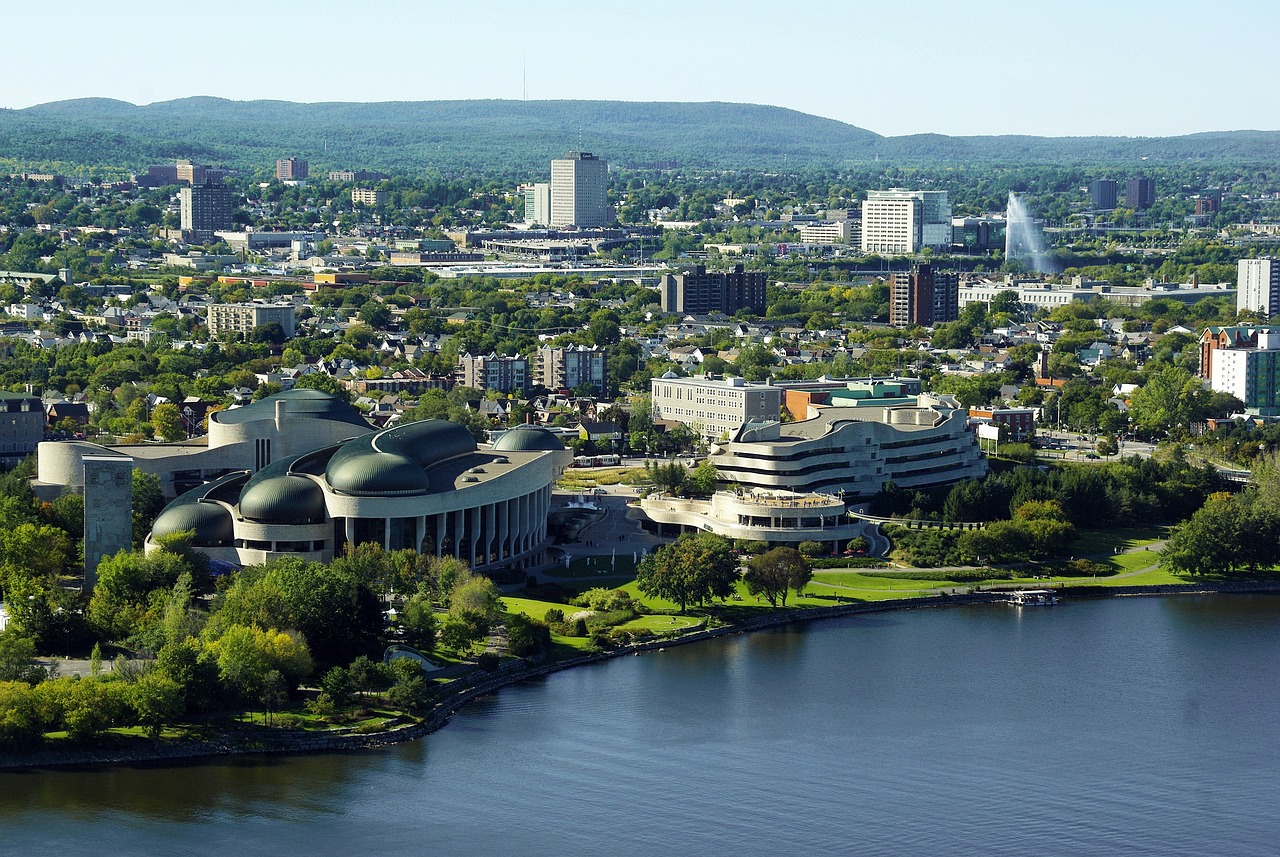
Ottawa is the invisible giant. Most founders forget it exists until someone reminds them that Shopify's headquarters is here, or that Ottawa has the highest concentration of tech workers per capita in Canada. It's not flashy or trendy, but it's steady, well-resourced, and quietly producing successful startups across multiple sectors.
Highlights
- Shopify alumni network and talent pool
- Highest concentration of tech workers per capita in CA
- Government contracts and defense tech opportunities
- Bilingual talent access
Why Ottawa Works for Tech Startups
Shopify's HQ in Ottawa has created a flywheel of alumni founders, operators, and angels who reinvest in the local ecosystem. Tobi Lütke's influence extends beyond Shopify itself. He's become a visible champion for Canada's tech sector, and Shopify's success has legitimized Ottawa as a serious innovation hub.
Fun fact: Ottawa has the highest concentration of tech workers per capita in Canada. The legacy of Nortel, Corel, and other telecom/software giants created a deep bench of experienced engineers and product managers. When those companies scaled down or shut down, the talent didn't leave. It dispersed into startups, government contractors, and emerging tech companies. This ecosystem development has created a mature tech community with experienced operators.
Invest Ottawa provides solid programming and connections. L-SPARK is one of the most focused SaaS accelerators in Canada, specifically built to help B2B software companies scale. Wesley Clover (Terry Matthews' investment firm) actively supports local startups and brings deep telecom and enterprise software expertise. These tech players collectively support the startup scene with mentorship and capital.
Carleton and the University of Ottawa produce strong engineering graduates, and the bilingual talent pool is a differentiator. Ottawa is officially bilingual, which means you can access French-speaking talent from Quebec without relocating to Montreal, and you can serve francophone markets more effectively than Toronto-based competitors.
Ottawa is also the capital, which means access to federal procurement, defense spending, and regulatory agencies. If you're building in cybersecurity, space tech (MDA is headquartered here), telecom infrastructure, or anything requiring government relationships, Ottawa gives you proximity and credibility that no other Canadian city can match. The tech sector here benefits from these unique government connections.
The investor ecosystem is smaller than Toronto's, but growing. Most Ottawa startups raising Series A+ rounds will need to look to Toronto or the US, but early-stage startup funding is available locally, and the BDC is active. Ottawa isn't the obvious first choice, but for B2B SaaS, govtech, or infrastructure companies, it deserves serious consideration. The overall vibe is family-friendly and low-stress. You could maybe say that Ottawa is boring in the best possible way.
#6. Calgary, AB

This is a city that built itself on oil and gas, watched the industry collapse, and is now rebuilding around cleantech, carbon capture, and a new generation of hungry, resourceful founders. The corporate tax rate is the lowest in Canada, your seed funding lasts twice as long as Toronto, and you're an hour from world-class mountains. Calgary isn't trying to be Silicon Valley North. It's playing a different game.
Highlights
- Lowest corporate tax rate in Canada
- Energy sector pivoting into cleantech and carbon capture
- Efficiency for seed-funded companies
- 1 hour to world-class skiing and hiking
Why Calgary Works for Tech Startups
The energy-to-cleantech transition is creating real opportunities. Companies like Eavor (geothermal energy) and a wave of carbon capture startups are leveraging Calgary's deep expertise in subsurface engineering, project management, and capital-intensive infrastructure. If you're building in energy, infrastructure, or anything requiring operational maturity, Calgary's talent pool is legitimately unique. This is among the best cities in the world for energy tech innovation.
Resources like Platform Calgary and the Creative Destruction Lab provide startup infrastructure that's better than most cities this size. The Alberta government has been aggressive with innovation grants, tax incentives, and support for cleantech and energy transition companies. The SR&ED tax credits are federal, but Alberta layers on additional provincial support that makes R&D significantly cheaper here than in other provinces.
The corporate tax rate is a real advantage. At 23% combined (8% provincial, 15% federal), Alberta has the lowest corporate tax burden in Canada. Ontario is 26.5%, BC is 27%, Quebec is 26.5%. For profitable startups or founders thinking about long-term tax efficiency, that 3-4% difference compounds quickly.
The cost of living is dramatically lower than Toronto or Vancouver. A nice two-bedroom apartment in Calgary costs $1,800-$2,200. The same quality in Toronto is $3,500+, in Vancouver it's probably $4,000+. Office space is cheap, salaries are lower (but still competitive for technical roles), and your seed funding genuinely lasts twice as long. For bootstrapped founders or capital-efficient teams, Calgary's cost structure is a massive strategic advantage.
Quality of life is underrated. You're an hour from Banff, Kananaskis, and some of the best skiing and hiking in North America. The outdoor culture is fun. Summers are beautiful, winters are cold but sunny (300+ days of sunshine per year), and the city is clean, safe, and easy to navigate.
However, the investor ecosystem is small. There's local angel capital, some seed funds, and BDC presence, but the density isn't there. Most Calgary companies raising later-stage rounds need to look to Toronto, Vancouver, or United States investors. For the right founder, especially in cleantech, energy, or even B2B, Calgary could be a smart choice.
How to Choose the Right Canadian City for Your Startup
To discover the best cities for your specific needs, match the city to your industry strength. If you're building in AI or machine learning, Montreal gives you access to world-class research and talent that nowhere else in Canada can match. Fintech or enterprise SaaS? Toronto has the deepest investor and customer base. Cleantech or climate-focused? Vancouver's ecosystem and values alignment will help you recruit and fundraise. Deeply technical infrastructure or hard science? Waterloo or Ottawa's engineering culture might be the right fit.
Consider your funding stage. Pre-seed and bootstrapped companies can thrive anywhere. Optimize for cost and focus. Cities like Waterloo, Ottawa, Calgary, or Montreal will stretch your runway and minimize distractions. Series A and beyond? You need investor density and access to follow-on capital, which means Toronto or Vancouver unless you're willing to travel frequently.
Think about your talent needs. If you need bilingual teams or access to Quebec's talent pool, Montreal is the only real option. Pure engineering depth and technical co-founders? Waterloo and Ottawa deliver. Operators, GTM professionals, and experienced executives? Toronto has the deepest bench. Creative and design talent? Vancouver and Montreal are the strongest.
Factor in personal quality of life. If you're an outdoor enthusiast who needs mountains and ocean, Vancouver or Calgary are the obvious choices. Cultural vibrancy and European energy? Montreal wins. Focus and family-friendly stability? Ottawa or Waterloo. Big-city energy and maximum optionality? Toronto is the only answer.
Consider your cross-border strategy within the global startup ecosystem. Vancouver's time zone and cultural ties make it ideal for Asia-Pacific expansion. Toronto's proximity to New York City investors and alignment with the US East Coast business culture help with American customers and investors. Montreal's bilingual talent and European connections open up francophone markets in Europe and Africa.
The right city depends on what you're building, where you are in the journey, and what kind of life you want while building it. There's no single correct answer. But Canada's top cities for startups offer more options than most founders realize.
Find Canadian Investors with OpenVC
The next Shopify is being built right now in one of these six cities. So is the next Wealthsimple, the next Lightspeed, the next breakout Canadian company that makes everyone forget the "just move to Silicon Valley" advice.
Canada is a strategic choice with real advantages. But you still need to raise capital, and finding the right investors shouldn't require dozens of spreadsheets and cold emails that go nowhere.
OpenVC gives you direct access to 1,000+ active investors across Canada, including VCs, angels, family offices, and accelerators actively writing checks. Filter by stage, industry, and geography. Build your target list. Find warm intros. Track every conversation in one place.
Your Fundraising CRM is already built. You just need to start using it.
Find your ideal investors now
Browse 16,000+ investors, share your pitch deck, and manage replies - all for free.
Get Started Now



![12 Best Startup Financial Model Templates [Free & Paid]](https://d1pnnwteuly8z3.cloudfront.net/images/177302d9-3657-45b7-ac9d-acf801d83a74/019fadd2-2388-77a4-a43e-6c44f536d546.jpg)