Hi, I'm Skylar Dorosin and I'm a Principal at nvp capital. 👋
As seed stage investors, our team at nvp capital spends a lot of time with founders at the earliest stages. When we begin engaging, there might not yet be a product, revenue is often lumpy or nonexistent, and the questions feel less like “what’s the right answer?” and more like “how do I even think about this?”
There usually aren’t perfect answers, but over time, there are patterns we’ve seen repeat across companies and cycles.
Below are eight questions we hear all the time, and how we tend to talk through them with founders, from the earliest days of building through gaining traction and starting to think about team expansion.
Table of Contents
1. How should I choose my co-founder?
We get this question constantly, and for good reason. This is the person you’ll be on a multi-year journey with, navigating all the ups and downs together. We’ve seen all flavors of co-founder relationships: longtime friends, former coworkers, people who met weeks before starting, solo founders who brought on a co-founder later, multi-person founding teams. We have seen so many successful partnerships, but also breakups as early as pre-seed, both before and after funding.
What we’ve found is that it’s less about there being one right way to start a company together, and more about whether you’ve actually worked together under pressure, disagreed meaningfully, and figured out how to move forward. How do your skills truly complement each other? How do decisions get made when things feel messy, and how do stalemates get broken?
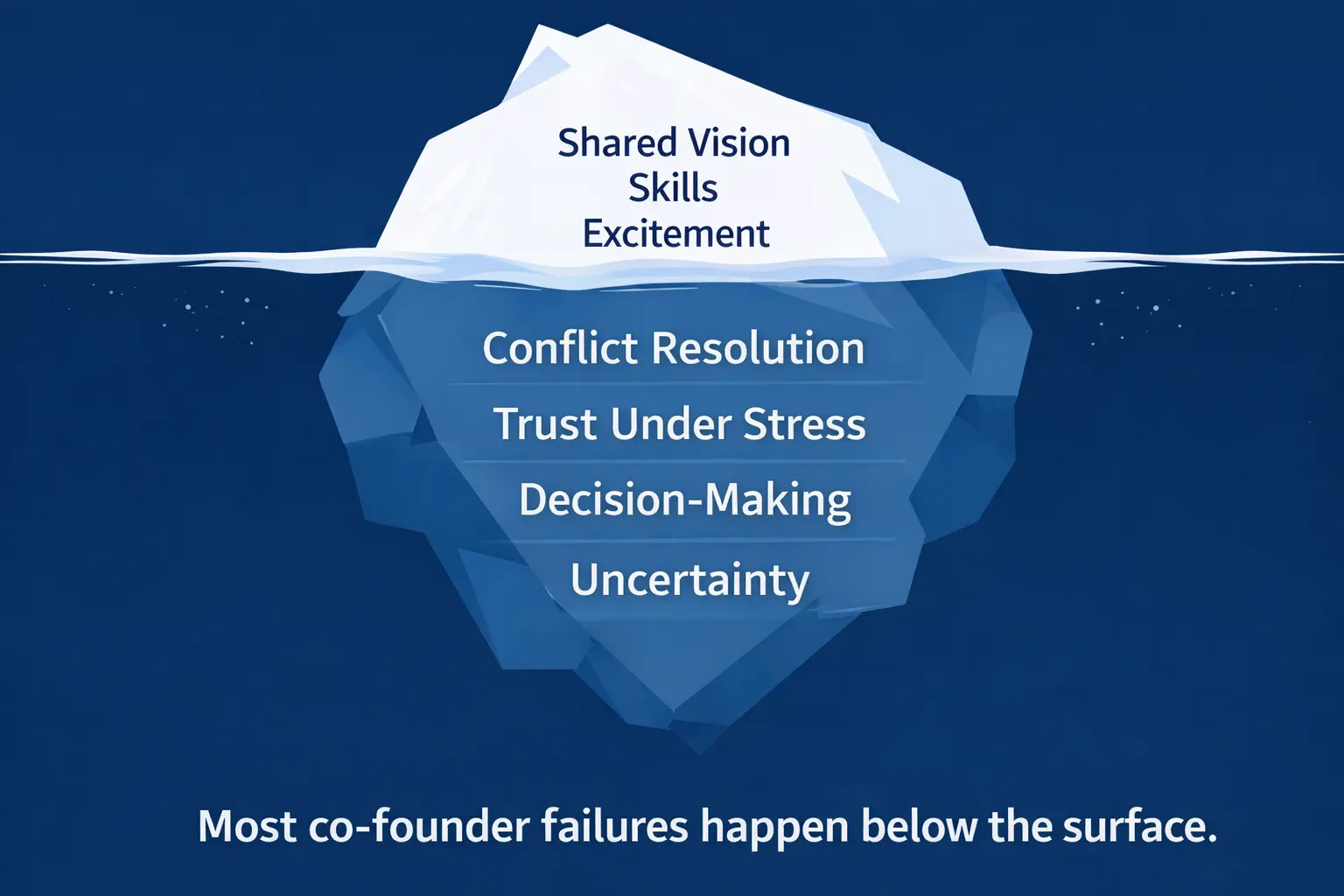
If you haven’t worked together before, we often suggest doing a short sprint or project together first. And as uncomfortable as it can be, it’s worth spending time on the hard topics early, including equity splits, decision-making, and how you’ll handle conflict, before you’re tired, stressed, and already deep in it.
2. When should I raise capital?
There’s no universal “right time” to raise, but we generally see the best outcomes when founders raise in response to pull, not just push. Are customers or early design partners showing real interest? Are you feeling constrained in a way that capital would meaningfully unlock, whether that’s hiring, shipping faster, or meeting demand?
Capital works best when it’s used to accelerate momentum that already exists. The question we usually come back to is: why now, and what actually changes if you do raise? Especially in tough-to-crack industries like the underdigitized ones we focus on, once you’ve built trust, you want to be able to lean into that momentum and move quickly, particularly in an AI-native world where it’s never been easier to start a company and new entrants are entering markets at record pace.
3. How should I think about pricing in the early days?
Founders often stress a lot about pricing early on, and we generally think it matters less than it feels like it does. What matters much more is whether someone is willing to pay at all, and whether you’re solving a problem they actually care about.
Especially in an AI-native world, customers are paying for outcomes, not tools. Are you taking on meaningful work for them, or giving them something cool but ultimately optional? Early pricing is really about validating that you’re solving a real, recurring problem. As you take on more of the value chain and deliver more consistent outcomes, pricing and more repeatable, sticky revenue can evolve naturally. We’ve shared more of our thoughts around early stage product pricing here, but the big takeaway is that pricing strategy in vertical AI isn’t one size fits all, it’s a continuous discovery process.
4. How do I think about design partners and pilots?
This one comes up a lot, especially in antiquated industries.
To us, design partners are the earliest believers, but that doesn’t mean those relationships should be open-ended or free. Your design partners feel the problem deeply, are willing to spend time with you, share hard-to-access data, and give honest feedback because they expect to get real value out of the relationship.
Design partnerships should still be time-bound and structured around delivering something concrete, even if the product is still being developed and/or evolving. Design partners, when things go well, should naturally become your earliest customers.
Now, onto pilots: Where we see founders get stuck is in pilot purgatory, running open-ended pilots without clear success criteria or a path to conversion. According to Rishi Dave, Expert Partner at Bain & Company and former CMO of Dun & Bradstreet, Vonage, and MongoDB , “pilots are becoming a dirty word” in some enterprise circles, because they often fail to scale. Pilots should be explicitly tied to outcomes, timelines, and a buying decision, and strong design partners should naturally be the ones who graduate into that phase if the value is there.
5. Should I focus on customer quality or quantity early on?
Early on, we almost always encourage founders to prioritize quality over quantity, particularly in the underdigitized spaces we focus on at nvp. A small number of engaged customers getting a truly great, 11-star experience can teach you far more than a long list of shallow users, and they often become a secret weapon.
Those early customers tend to become your champions. They help shape the product, introduce you to others, and build early credibility in the market. This is especially true in higher-ACV or slower-moving industries, where trust and depth matter more than speed.
6. How do I hire my first engineer as a non-technical founder?
There’s no single right answer here, and it really depends on what you’re trying to optimize for, the space you’re building in, and your own strengths as a founder.
If speed and iteration matter most, and especially if you have some technical ability yourself, a scrappy engineer who can prototype quickly may be the right fit. If you’re building something technically complex with long-term implications, a more experienced player-coach who can lay strong technical foundations themselves and build out a team later may make more sense.
We usually encourage founders to step back and look honestly at their own strengths and gaps. The goal isn’t to hire someone impressive on paper. It’s to hire someone who complements you and the rest of the early team.
7. How do I know something isn’t working and when to pivot?
This is one of the harder questions, and one that doesn’t get talked about enough. Early building is supposed to be hard, but there’s a difference between productive struggle and constant resistance. If customers aren’t excited, willingness to pay isn’t there, or progress feels like pulling teeth despite multiple iterations, it’s worth pausing and reassessing.
Pivoting isn’t failure. It’s often part of the process. We see the best founders stay honest with the signals, lean on their investors as thought partners, and stay open to changing direction when the data, and their gut, point that way.
One of the most important truths is that the right early stage investors will be there for all of it. The highs, the lows, and the late-night "I'm at a fork in the road” moments. Whether it’s 10pm on a Tuesday or a Saturday afternoon, choose partners that will pick up your call and walk with you through each step of growing your business.

8. How should I think about my first sales hire?
Early on, no one is better positioned to sell than the founder. Founders know the customer, the problem, and the story better than anyone else, and that context is hard to outsource too early.
Once you start seeing real pull from the market, the right first sales hire often depends on the founder profile. Founders with sales backgrounds may start with a high-slope AE, while others may benefit from bringing in a more senior head of sales to help open doors or formalize the motion. In tougher-to-break industries, a well-placed advisor can also help with early signaling and credibility, allowing you to move faster without committing to a full-time hire too early.
About the author
Skylar Dorosin is a Principal at nvp capital; In addition to leading deals, Skylar plays a key role in writing and developing theses on vertical AI and the technologies transforming legacy industries, and articulating what nvp looks for in the next generation of category-defining companies. nvp capital is a seed stage venture firm that backs founders building vertical AI for under digitized industries.
For more from nvp capital, follow them on LinkedIn or check out their content page at nvpcap.com/content





![12 Best Startup Financial Model Templates [Free & Paid]](https://d1pnnwteuly8z3.cloudfront.net/images/177302d9-3657-45b7-ac9d-acf801d83a74/019fadd2-2388-77a4-a43e-6c44f536d546.jpg)