Most investor lists look good until you try to use them.
You pull names from a few platforms, maybe add some angels you’ve seen on Twitter or LinkedIn, send a batch of outreach, and wait. A few replies come in, most don’t, and it’s not clear what’s off. The list felt relevant. The outreach felt reasonable. The results don’t match either.
That gap usually comes down to how the list was built and how the process is run.
The investors who actually reply tend to have a few things in common. They invest at your stage, they’ve written checks recently, and there’s a clear reason for them to look at your company. Once those are in place, outreach starts to behave differently. Conversations show up more consistently, and it’s easier to tell who’s serious.
From there, it becomes a process problem. Who gets contacted first, where you have intro paths, how follow-ups are handled, and whether conversations are tracked in a way that keeps things moving.
This guide walks through how to find angel investors, build a list that holds up once outreach starts, use warm introductions where they actually help, and manage conversations without losing momentum.
It also shows how founders like you can use OpenVC to filter investors, identify connections, and keep everything organized while you're raising capital.
Table of Contents
How to Find Angel Investors
There is no shortage of places to find angel investors.
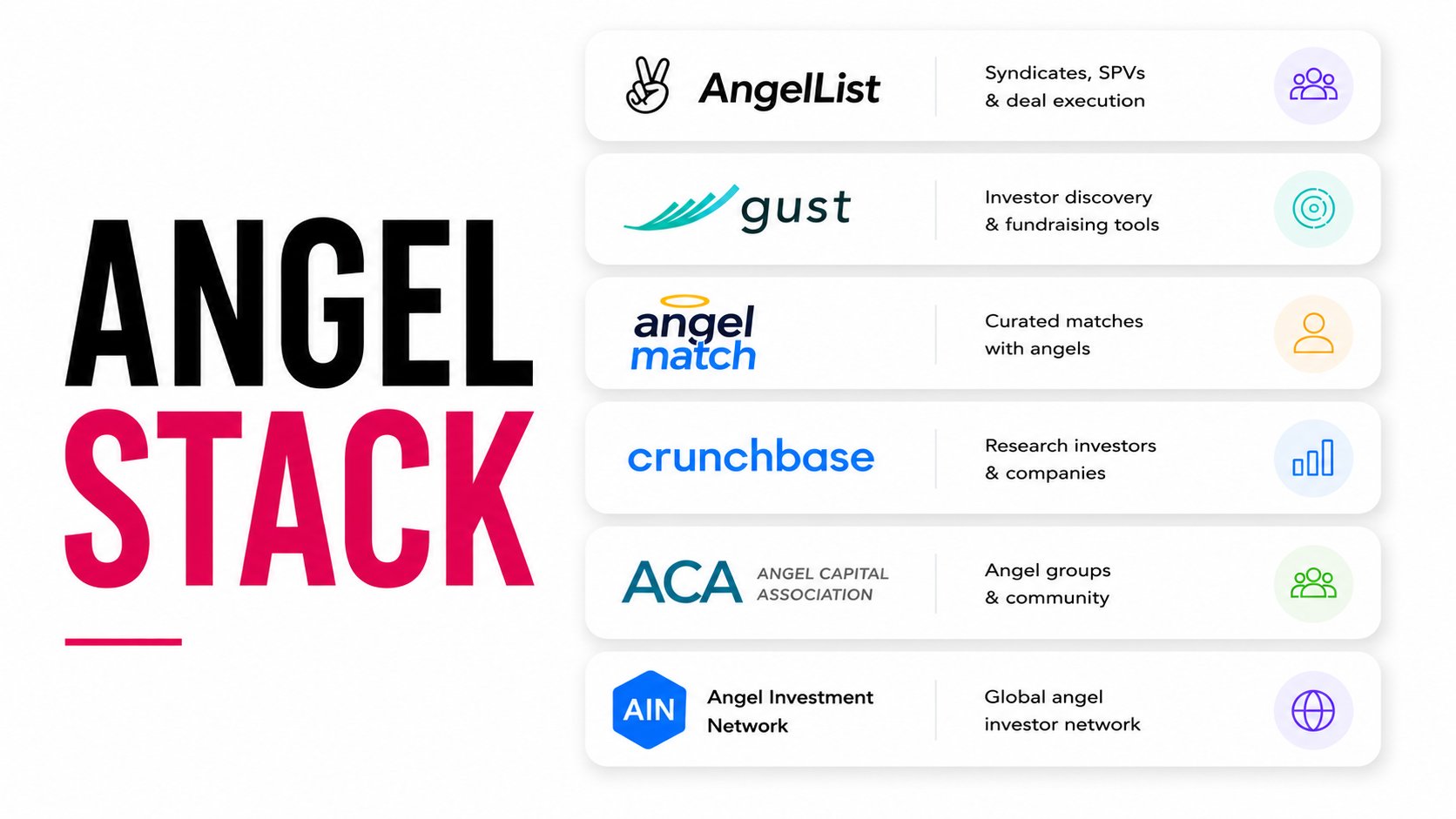
Firstly, there are plenty of websites out there. We suggest you start with OpenVC’s database of angels. But other popular angel investing platforms include AngelList, Angel Capital Association (ACA), and Angel Investment Network.
What matters is knowing which sources give you structured access, which ones help you expand your list, and which ones lead to real conversations.
Here are additional sources that will likely have high success rates.
Existing Angel Investors
The most common place to start is with investors who are already backing startups.
This includes individual angels, angel groups, syndicates, operators, founders, and early-stage venture capitalists who occasionally make personal investments.
Many founders use platforms like OpenVC to discover investors based on industry, stage, geography, and check size.
Startup Communities
Some of the best investor relationships begin long before a fundraising process starts.
Founder communities, accelerators, incubators, startup and vc events, industry conferences, and online communities can all lead to introductions and investor conversations. These environments are particularly valuable for first-time founders who are still building their network.
Other Founders
Founders who have recently raised funding are often one of the best sources of investor recommendations.
They can tell you:
- Which investors are actively deploying capital
- Which investors are relevant for your stage
- Who moves quickly
- Who adds value after investing
A single founder conversation can save weeks of investor research.
Professional Networks
Lawyers, accountants, advisors, operators, and startup mentors often have direct relationships with active angel investors.
These networks can be especially helpful when you're looking for introductions or trying to understand which investors are a good fit for your company.
Angel Networks and Syndicates
Many angels invest through organized groups rather than independently.
Angel networks and syndicates allow founders to reach multiple investors through a single application or introduction process. Depending on your geography and industry, these groups can be an effective complement to direct outreach.
How Startup Founders Actually Find Angel Investors with OpenVC
Finding the right angel investors is best when it is a systematic process.
You build a list, narrow it down, figure out how to reach people, and manage conversations over time. Most of the outcome is determined before you ever send a message.
This is exactly how to run that process using OpenVC.
Step 1: Build a Target List
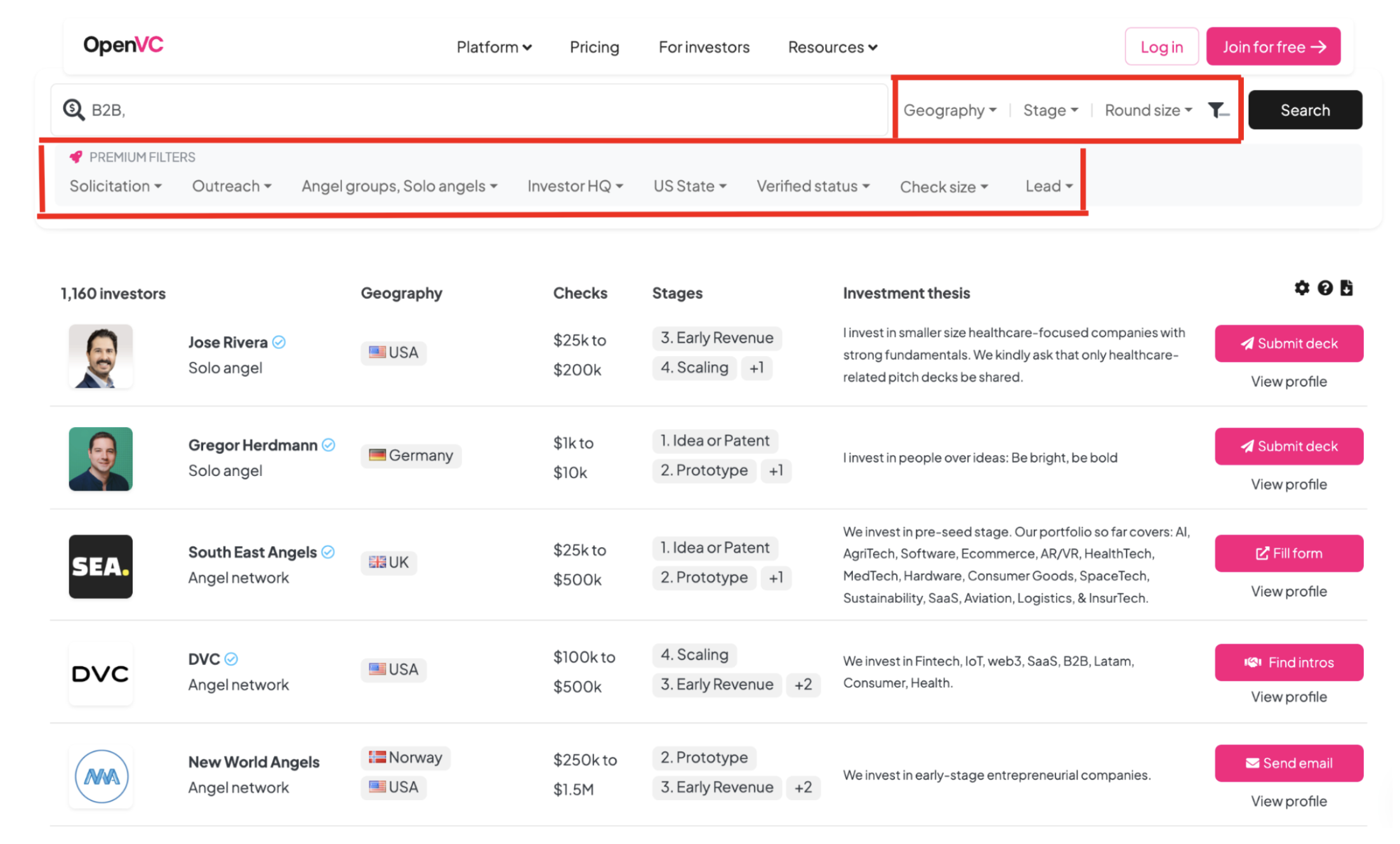
Start with a list of 50 to 150 investors.
That range forces prioritization. Too small and you run out of options. Too large and you lose focus and slow down your execution.
You’ll typically start by filtering investors by stage, industry, geography, and check size. Tools like OpenVC make this fast, but the filtering is just the starting point. The real work is deciding who actually belongs on your list.
Build your list by:
- Filtering for:
- Stage
- Industry
- Geography
- Check size
- Reviewing profiles one by one before adding them
We also have pre-built angel investor lists, based on location and industry. Some examples are:
What to look for:
- Portfolio companies similar to yours
- Clear investment focus
- Evidence of consistent investing
If you cannot explain in one sentence why an investor belongs on your list, remove them.
The result: A focused list of investors you are confident reaching out to.
If you need help, check out our guide to building the perfect investor list.
Find your ideal investors now
Browse 16,000+ investors, share your pitch deck, and manage replies - all for free.
Get Started Now
Step 2: Filter for Activity and Fit
Most investor lists look strong until you check actual behavior.
A large percentage of investors are inactive, invest rarely, or operate outside your stage. Reaching out to them creates noise and slows your process. This step removes low-probability targets before you spend time on outreach.
At this stage, go back through your list and validate each investor against real activity. This is easy to do when you can quickly see recent deals and patterns across their portfolio.
Review each investor for:
- Recent angel investments
- Frequency of deals
- Relevance of portfolio
Remove investors who:
- Have no recent activity
- Invest outside your stage
- Show no pattern in your space
Prioritize investors who:
- Invest multiple times per year
- Back companies similar to yours
- Are active at your exact stage
You are optimizing for probability, not volume.
What you get: A smaller, sharper list of investors who are actively deploying capital.
Step 3: Find Warm Introduction Paths
Before blasting out any messages, figure out your larger investor outreach strategy.
This step has a direct impact on reply rates because introductions add context before the investor ever sees your pitch. A cold email has to create trust from scratch. A good intro starts with borrowed trust from someone the investor already knows.
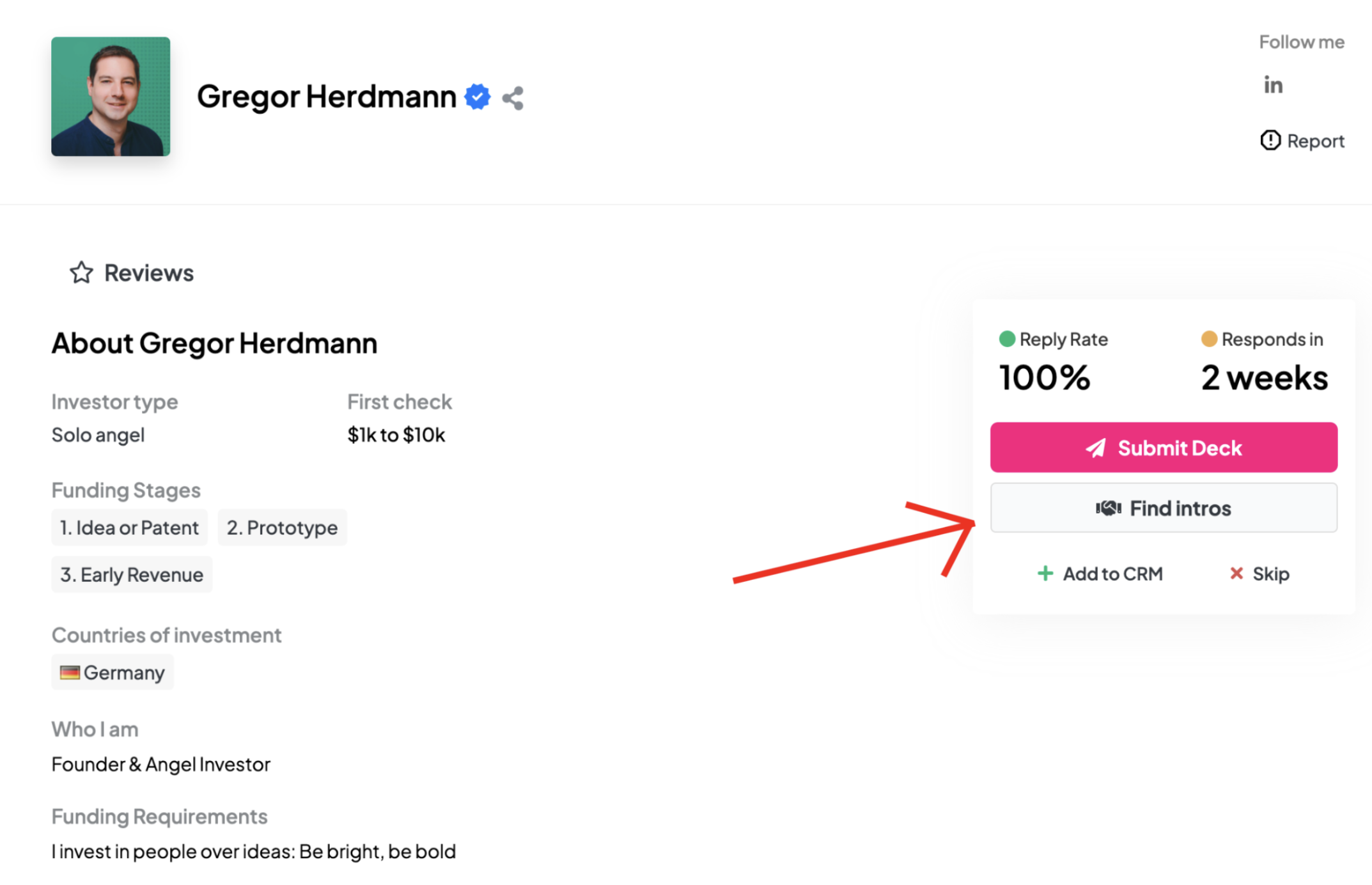
Instead of sending messages blindly, map out your access first. OpenVC’s Intro Finder is useful here because it surfaces shared connections automatically, which saves a lot of manual searching.
For each investor, identify:
- Direct connection
- Strong second-degree connection
- Weak second-degree connection
- No connection
Expand your search through:
- Alumni networks
- Former colleagues
- Lawyers and operators
Then prioritize outreach in that order.
A direct relationship is best. A trusted second-degree intro is next. If there is no connection, cold outreach still works, but the message needs to be tighter and more relevant.
What you end up with: A mapped approach for each investor so you know exactly how to reach them.
Step 4: Run Outreach
Once your list is built and your approach is mapped, you start outreach.
This is where most founders slow down. They spend too much time trying to perfect messages and not enough time running the process. What matters here is clarity, consistency, and volume.
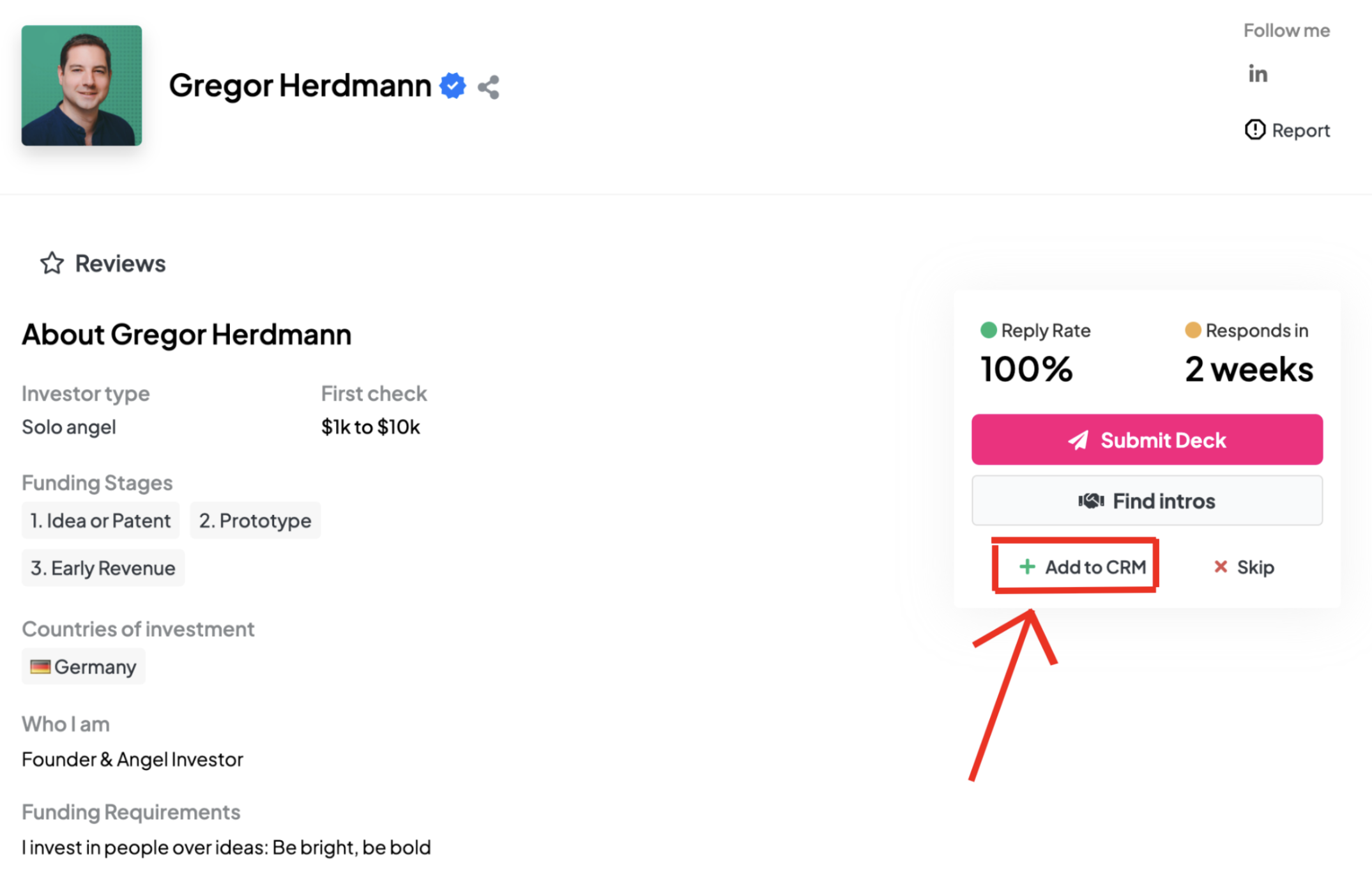
At this point, your investor list should already be structured. Using something like OpenVC’s CRM keeps everything in one place so you are not juggling spreadsheets and inbox threads.
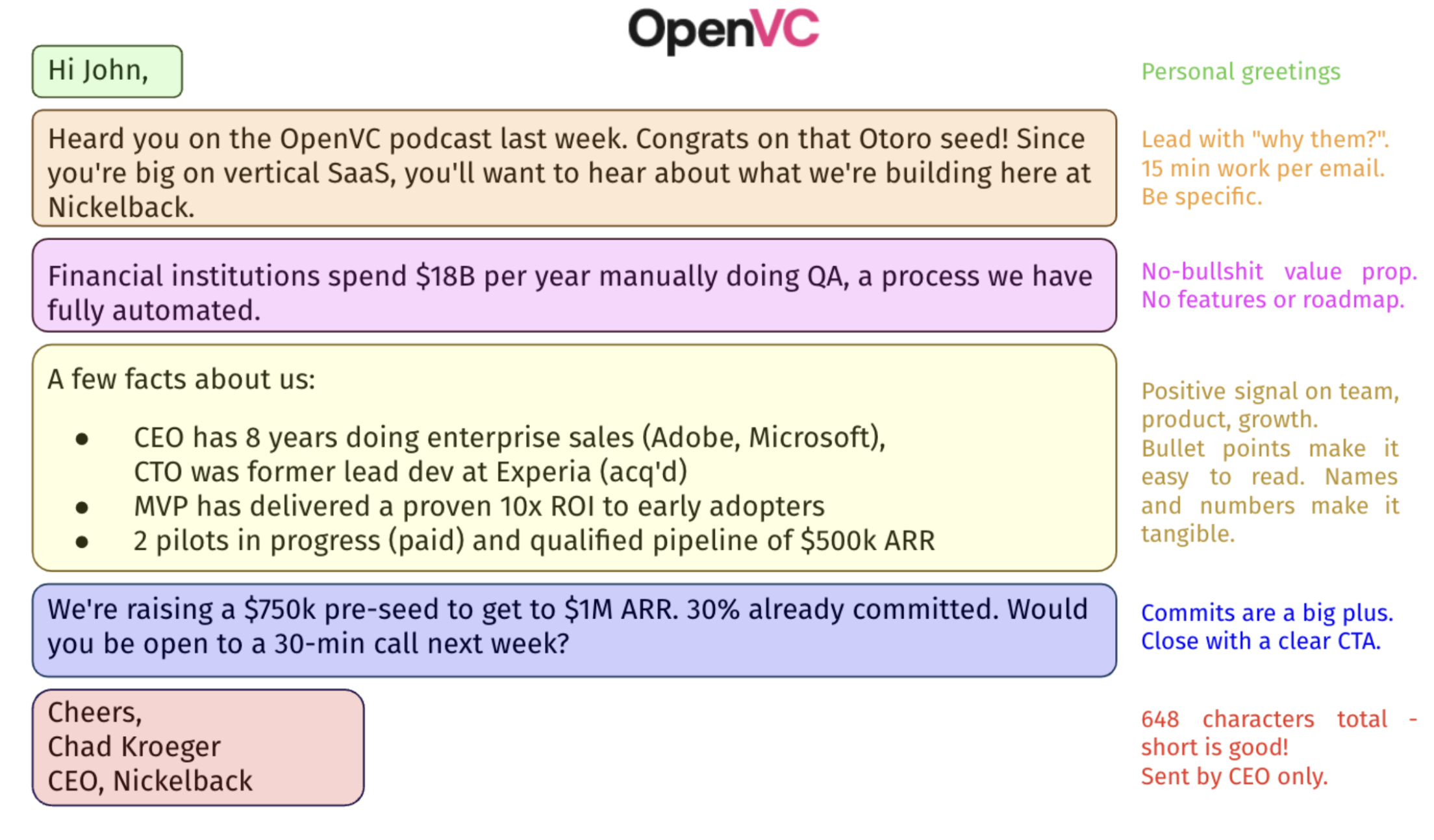
Structure your message:
- Who you are
- What you are building
- Why you are reaching out to them
- A clear ask
Keep it short. Investors decide quickly whether to engage.
Execution:
- Reach out to 10 to 20 investors at a time
- Personalize based on relevant context
- Keep messages concise
The goal is to start conversations, not explain everything upfront.
Output: A steady flow of investor conversations entering your pipeline.
Step 5: Track Conversations
Once replies start coming in, you are managing multiple conversations at once.
Without structure, things break quickly. You forget who you contacted, miss follow-ups, and lose context between conversations. This is where most funding processes stall.
You need a single place where every investor has a status and next step. That is where tools like OpenVC become less about discovery and more about execution.
Track:
- Contact status
- Replies
- Meetings
- Next steps
Maintain visibility on:
- Who replied
- Who needs a follow-up
- Who is actively engaged
- Where momentum is building
Fundraising is a pipeline. Treating it that way keeps everything organized.
The benefit: A structured view of your raise with full visibility into every conversation.
Step 6: Follow Up Consistently
A large portion of replies come from follow-ups.
Investors miss messages. Timing is often off. A lack of response is usually not a final answer. Consistent follow-up brings conversations back to the surface.
At this stage, the advantage of having everything tracked becomes clear. You are not guessing who to follow up with or when.
Execution:
- Follow up every 5 to 7 days
- Send 2 to 3 follow-ups
- Keep messages short
A simple nudge is enough. No need to rewrite your pitch. That's why it's important to track pitch deck opening. If your deck has been opened and there's no reply, most likely there's no interest. If it hasn't been opened, it's worth pushing again
Consistency here drives results.
The reward: More replies, more conversations, and fewer missed opportunities.
What This System Gives You
By the end of this process, you have more than a list of investors. You have a working fundraising pipeline.
Every investor has a status. Every conversation has a next step. You know who is engaged, who needs follow-up, and where traction is building.
That structure is what keeps a raise moving.
Using OpenVC ties the workflow together, you can:
- Build your investor list
- Identify intro paths
- Track outreach
- Manage follow-ups
The result is a process you can actually run without losing context or momentum.
Warm Introductions
Finding angel investors for your startup includes more than building a list. Access plays a major role in who responds and who doesn’t.
Warm introductions are one of the most effective ways to reach investors because they add context before your message is even read. Instead of starting from zero, you are coming in through someone the investor already knows.
This was introduced in Step 3 of the system. This section goes deeper on how to use introductions effectively once you’ve identified where they exist.
What Makes a Strong Introduction
Not all introductions carry the same weight.
The value comes from the relationship between the person making the intro and the investor. If that relationship is strong, the introduction does most of the work before your message is even read.
Strong introductions usually come from:
- Founders the investor has backed
- Co-investors who repeatedly invest with the same people
- Operators or advisors they trust
- Close professional relationships
Weaker introductions usually come from:
- Loose LinkedIn connections
- People with limited interaction with the investor
- Generic messages with no context
If the person making the intro cannot explain why you are relevant, the investor has to figure it out on their own.
How to Find the Right Introduction Paths
By this point, you should already have a list of investors and a sense of where connections exist.
Now the focus is prioritization.
OpenVC helps here by surfacing shared connections directly alongside investor profiles. That makes it easier to scan your list and identify where you have real access.
For each investor, identify:
- Direct connections
- Strong second-degree connections
- Weak second-degree connections
- No connection
Expand your search for intros through LinkedIn, alumni networks, former colleagues, lawyers, operators, and other entrepreneurs.
You are looking for people who can make a credible introduction, not just any connection.
How to Ask for an Introduction
The way you ask for an intro affects whether it happens.
Most people hesitate to help when the ask is unclear or requires extra work. Keeping it simple increases the chances that the intro actually gets sent.
Be specific about who you want to meet. Explain why that investor is relevant. Include a short blurb they can forward. Don’t make the process too complicated, or your request will seem more like a burden.
How This Fits Into Your Outreach
Introductions should be used alongside direct outreach.
Your list will naturally split into:
- Investors you can reach through strong connections
- Investors you will contact directly
With OpenVC, these paths are visible while you are building and managing your list, so you can prioritize without switching between tools.
How to Choose an Angel Investor
Once you start getting interest, the dynamic shifts.
Up to this point, the focus is on getting in front of the right angel investors and starting conversations. Then a few people lean in, ask for more details, maybe take a call. This is where a lot of founders flip their mindset and assume the hard part is done.
It isn’t.
This is where you decide who ends up on your cap table, and that decision sticks around longer than most people expect.
Early investors show up in future rounds. They get pulled into decisions. They influence how other investors perceive your company. The difference between a good angel and a bad one does not show up on day one, it shows up over time.
What actually matters
At this stage, you’re paying attention to how people behave.
Some investors move quickly. They understand what they’re looking for, ask direct questions, and give you a clear answer. Others drag things out, stay vague, or keep asking for more without committing.
That difference matters more than anything they say about “adding value.”
A few signals tend to show up early:
- Speed: Angels who invest regularly do not need weeks to decide. If someone is interested, you will feel it quickly.
- Clarity: You should know where you stand after each interaction. If every conversation ends with “let’s keep in touch,” that’s your answer.
- Pattern recognition: Investors who have backed companies like yours will ask better questions. They get to the point faster.
Where founders get this wrong
A common mistake is treating all interests the same.
Someone agrees to a call, asks a few questions, and suddenly they’re treated like a serious lead. Meanwhile, another investor moves faster and asks for specifics, but gets the same level of attention.
Not all signals are equal.
You want to lean into the investors who ask about terms or next steps, reference similar companies, and introduce you to someone else early
Those are the conversations that tend to turn into checks.
Everything else is noise until proven otherwise.
Red flags show up early
You usually don’t have to dig for red flags. They show up in how the investor operates.
Slow replies, unclear feedback, constantly shifting expectations. None of that improves after they invest.
If anything, it becomes more pronounced.
You’ll also run into investors who:
- haven’t written a check in years
- want to over-influence decisions at a very early stage
- speak confidently about areas they don’t actually understand
These are easy to overlook when you’re focused on closing the round.
They’re much harder to deal with later.
Use your pipeline to make decisions
This is where tracking your conversations becomes useful again.
By the time you have a few investors engaged, you should have context on each one. Who responds quickly, who follows through, who keeps things moving.
If you’re using something like OpenVC, this becomes easier because every interaction is logged in one place. You’re not relying on memory or scattered notes.
That makes it much clearer when you start comparing investors side by side.
The goal
You’re building a small group of people who are aligned with how you want to run the company.
That usually means:
- people who move at your pace
- people who understand what you’re building
- people who can help you get to the next step
Not every investor needs to check every box. But the overall group should make your life easier, not harder.
That’s the difference between closing a round and setting yourself up well after it closes.
Find Angel Investors for Free on OpenVC
OpenVC is the best way to find angels online and run your entire raise.
You can browse a database of angels and angel networks, reach out to investors, share your pitch deck, and organize your communications all in one place.
Get started today, completely free of charge.
Find your ideal investors now
Browse 16,000+ investors, share your pitch deck, and manage replies - all for free.
Get Started Now




![12 Best Startup Financial Model Templates [Free & Paid]](https://d1pnnwteuly8z3.cloudfront.net/images/177302d9-3657-45b7-ac9d-acf801d83a74/019fadd2-2388-77a4-a43e-6c44f536d546.jpg)