If you’re a new or emerging fund manager, one of the first things you should know is that there is no single “LP Database” category.
Some tools are built for deep institutional research. Others are closer to CRMs with a data layer. A few try to combine sourcing, outreach, and workflow into one system. And then you’ve got platforms that sit somewhere in between (part data, part network, part infrastructure).
They all get labeled the same thing. They’re not.
That’s where it gets tricky. Pricing alone can swing from a few thousand a year to well into five figures, and what you’re actually getting varies just as much. Two tools might both call themselves an LP database, but one helps you analyze allocator behavior while the other helps you send your first 50 emails.
Nevertheless, your data sources are an integral component of every emerging manager's fundraising strategy.
And choosing the right one(s) is about understanding what you need right now in your raise, and which tool is built for that.
This guide breaks down some of the most widely used platforms across the spectrum. Where they’re strong, where they fall short, and how they actually fit into a real fundraising process.
Table of Contents
5 Things Emerging Managers Actually Need from an LP Database
There’s no shortage of LP data. That’s not the problem.
The problem is that most of it is built for analysis, not action.
When you’re an emerging manager new to fundraising, you’re not studying the market. You’re trying to build a pipeline. That means figuring out who to reach, getting in touch, and keeping those conversations moving.
The tools that help with that feel very different from the ones designed for research.
Here’s what actually matters:
1. Access to Real People, Not Just Institutions
A lot of platforms give you LP firms. That sounds useful until you realize you still don’t know who to email.
The gap between “this LP looks relevant” and “I can actually reach someone there” is where most of the friction lives. If a database doesn’t close that gap, it slows everything down.
At this stage, you’re not building a map of the ecosystem. You’re trying to start conversations.
2. A Clear Signal on Who’s Actually Deploying
On paper, plenty of LPs look like a fit. In reality, timing matters more than alignment.
Some are between funds. Some have already filled their allocation. Some are only loosely active.
Without some sense of who’s actually writing checks right now , you end up with a list that looks solid but goes nowhere. The best tools surface that signal (even if imperfectly), so you’re not guessing.
3. The Ability to Get to a Shortlist Quickly
You don’t need more options. You need fewer, better ones.
Good filtering gets you from thousands of LPs down to a tight, usable list without spending hours doing it. Geography, check size, strategy: those things should take minutes to dial in, not half a day.
Because until you have a shortlist, you’re not really fundraising yet.
4. Something That Resembles a System
At first, it feels like research. Then suddenly you’re juggling dozens of conversations.
Who replied, who didn’t, who needs a follow-up, who’s asking for materials: it stacks up fast. If there’s no structure to support that, you end up building your own system mid-raise, which is never ideal.
It doesn’t need to be complex. It just needs to keep you from losing track of where things stand.
5. Momentum, Not Perfection
Most people assume the goal is to build the perfect LP list before reaching out.
It isn’t.
The managers who make progress are the ones who start early, get feedback, and iterate. That only happens if your tools let you move quickly. Build a list, send a few emails, learn, adjust, repeat.
A database that slows you down, even if it’s more “complete”, works against you.
LP Navigator — Built for Running a Raise, Not Just Researching One
Best for: Emerging managers who want a simple way to build a high-quality LP list and start outreach.
Pricing : $300/month
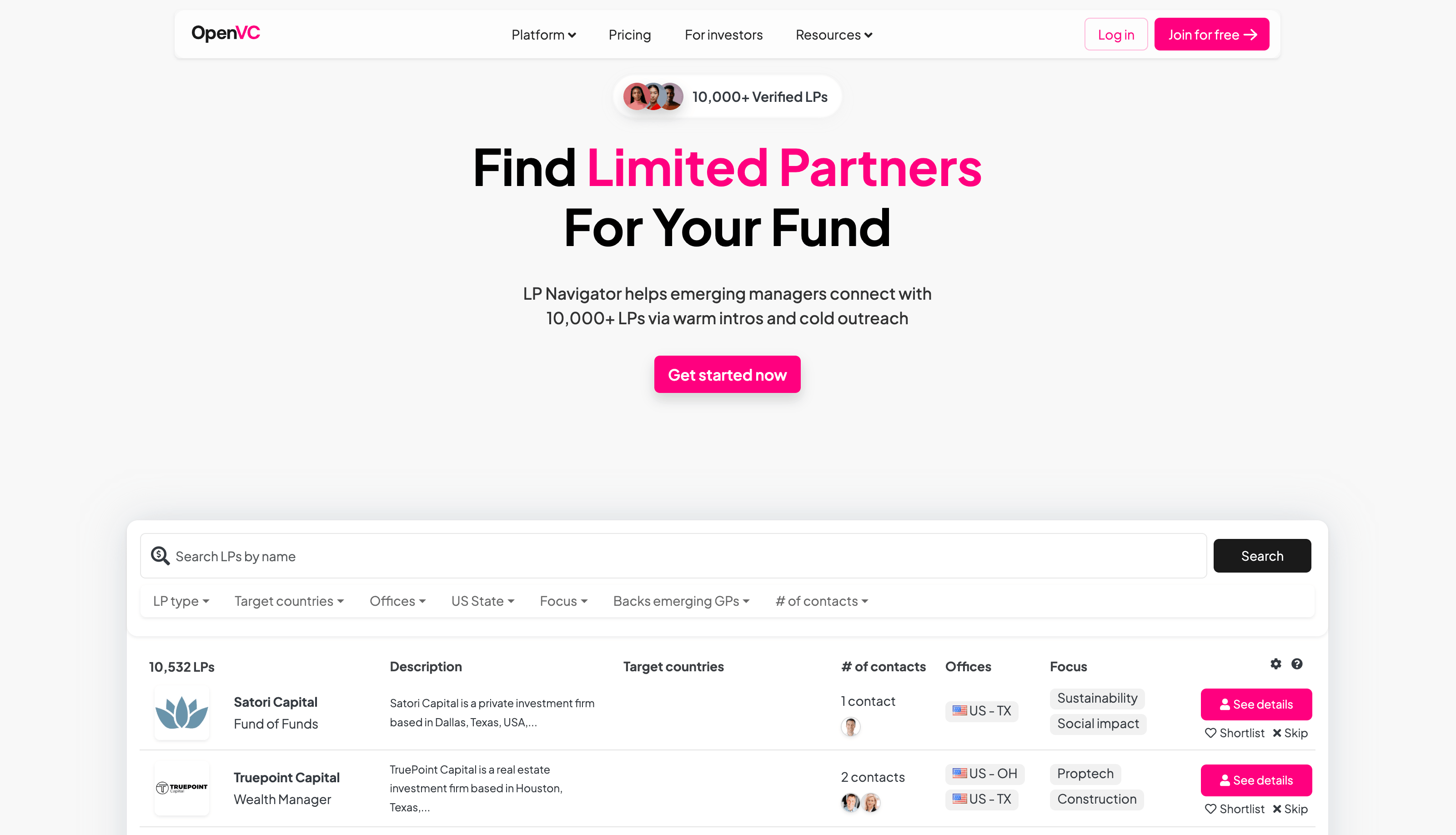
LP Navigator isn’t trying to be a full fundraising platform. It’s a focused tool for one part of the process: finding the right LPs and getting in touch with them.
You can filter through a large set of LPs, narrow down based on your strategy, and build a shortlist with usable contact info or intro paths. From there, you take those conversations wherever your workflow already lives.
It’s intentionally platform-agnostic. No heavy setup, no complex system to manage. Just a faster way to go from “who should I talk to?” to actually reaching them.
It also leans toward the LP segments most emerging managers spend time on (family offices, HNWIs, and smaller allocators) while keeping pricing accessible compared to legacy tools.
Access the Right LPs, Without the 5-Figure Price Tag
Build a targeted LP list, get contact info or intro paths, and dive into outreach for just $300/month.
Preqin — Institutional LP Intelligence, Built for Depth Over Speed
Best for: Managers targeting pensions, endowments, and large institutional allocators.
Pricing : $15K-$50K+/yr
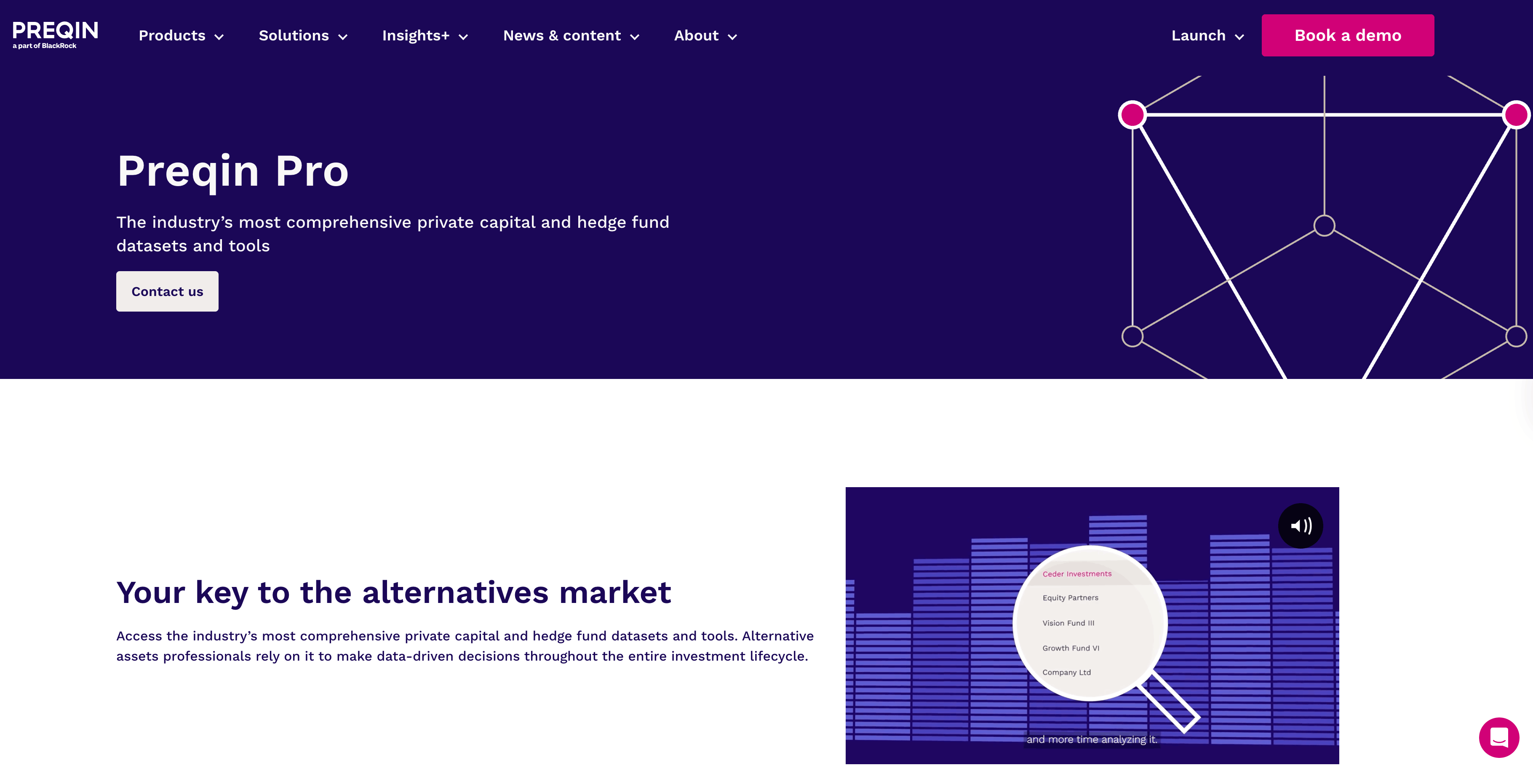
Preqin has been the standard for institutional LP data for years, and it shows in the depth of its coverage. It tracks allocation strategies, historical commitments, and fund performance across private markets, making it one of the most comprehensive sources for understanding how large allocators behave.
That depth comes with tradeoffs. The platform is built for research and benchmarking, not fast outreach. For emerging managers, especially those focused on family offices or smaller LPs, it can feel heavy and slower to translate into actual conversations.
- Coverage: Deep across pensions, endowments, sovereign wealth funds, and institutions
- Strength: Best-in-class data on LP allocations, commitments, and fund performance
- Limitation: Limited decision-maker contactability and thinner family office coverage
- Workflow fit: Better for research-heavy teams than fast-moving fundraising workflows
FundingStack — End-to-End Fundraising System for Structured Raises
Best for: Managers who already have a pipeline and need to run a disciplined process.
Pricing : $200–$500 / month
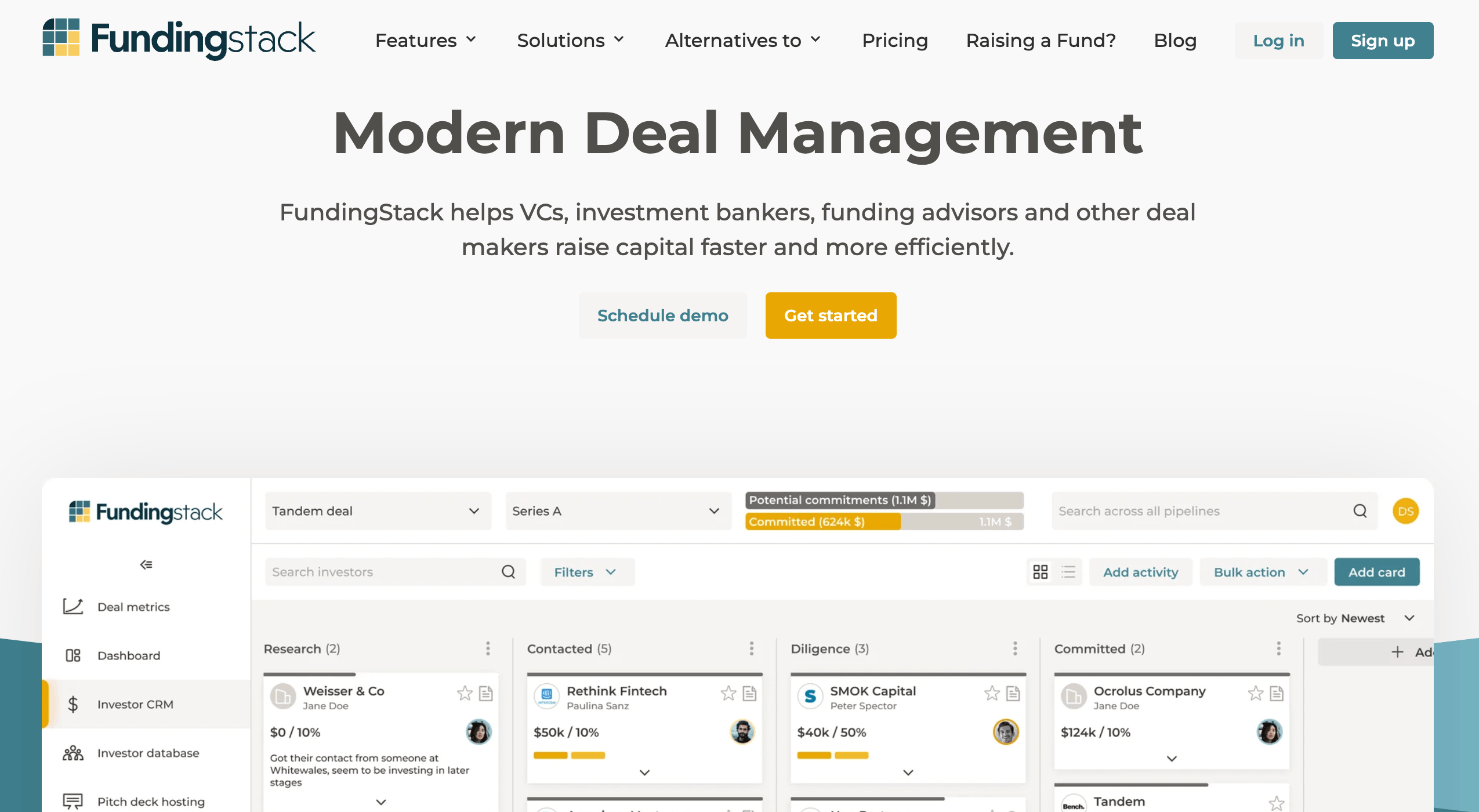
FundingStack is built around execution. It combines an investor database with CRM functionality and outreach tools, allowing you to manage your entire fundraising pipeline. From initial contact through follow-ups and commitments, you can do it all in one place.
Where it stands out is in structure. You can customize pipelines, track engagement, and monitor progress in real time. The tradeoff is that it assumes you already have momentum. If you’re still figuring out who to reach out to, the value comes more from how you use the system than from the data itself.
- Coverage: Broad investor dataset with direct contact information
- Strength: Strong pipeline management, outreach tools, and reporting
- Limitation: Less differentiated on LP discovery compared to dedicated sourcing tools
- Workflow fit: Best for managers running an active, process-driven raise
PitchBook — If You Want to Know Everything About an LP
Best for: Deep research on LPs, their portfolios, and the broader market
Pricing : ~$20,000–$50,000+ / year
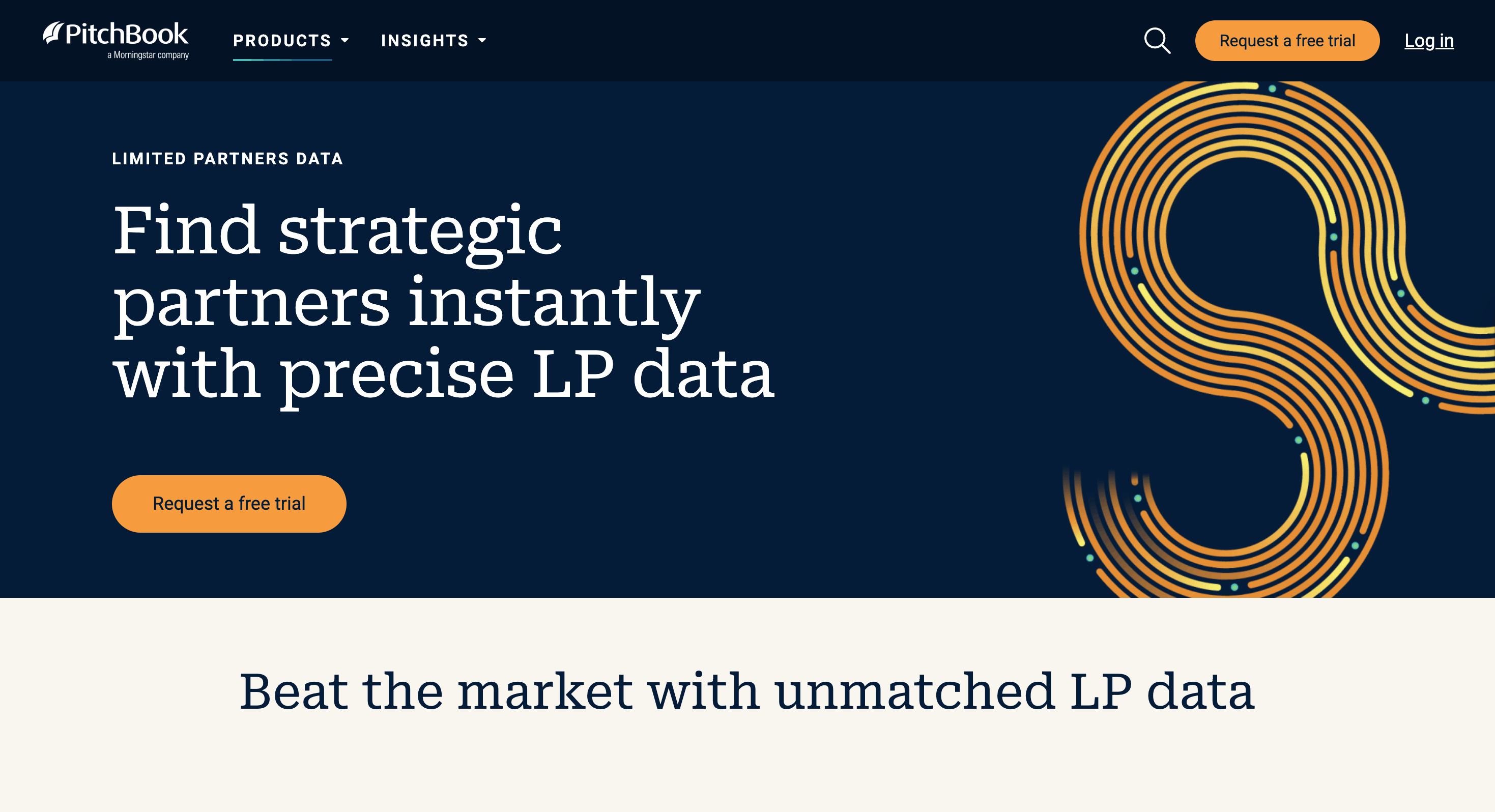
PitchBook is less of a fundraising tool and more of a system of record for private markets. If you’re the kind of person who wants to understand exactly how an LP invests (what funds they’ve backed, how active they’ve been, who they tend to co-invest with), it’s hard to beat.
Pitchbook’s competitive edge is fundraising context. It will show you trends and patterns most other LP databases and tools won’t. That said, it doesn’t really try to help you run a raise. It’s what you open when you’re thinking, not when you’re sending emails.
- Coverage: Extremely broad; LPs, funds, companies, deals, advisors
- Strength: Unmatched context into how LPs actually deploy capital
- Limitation: Fundraising workflow lives outside the platform
- Workflow fit: Research-heavy approach before (or alongside) outreach
FindLimitedPartners — A Clean List of LPs You Can Actually Contact
Best for: Getting from zero to first outreach list quickly
Pricing : $3,900 per database
Some tools feel like you need a playbook just to use them. This is the opposite.
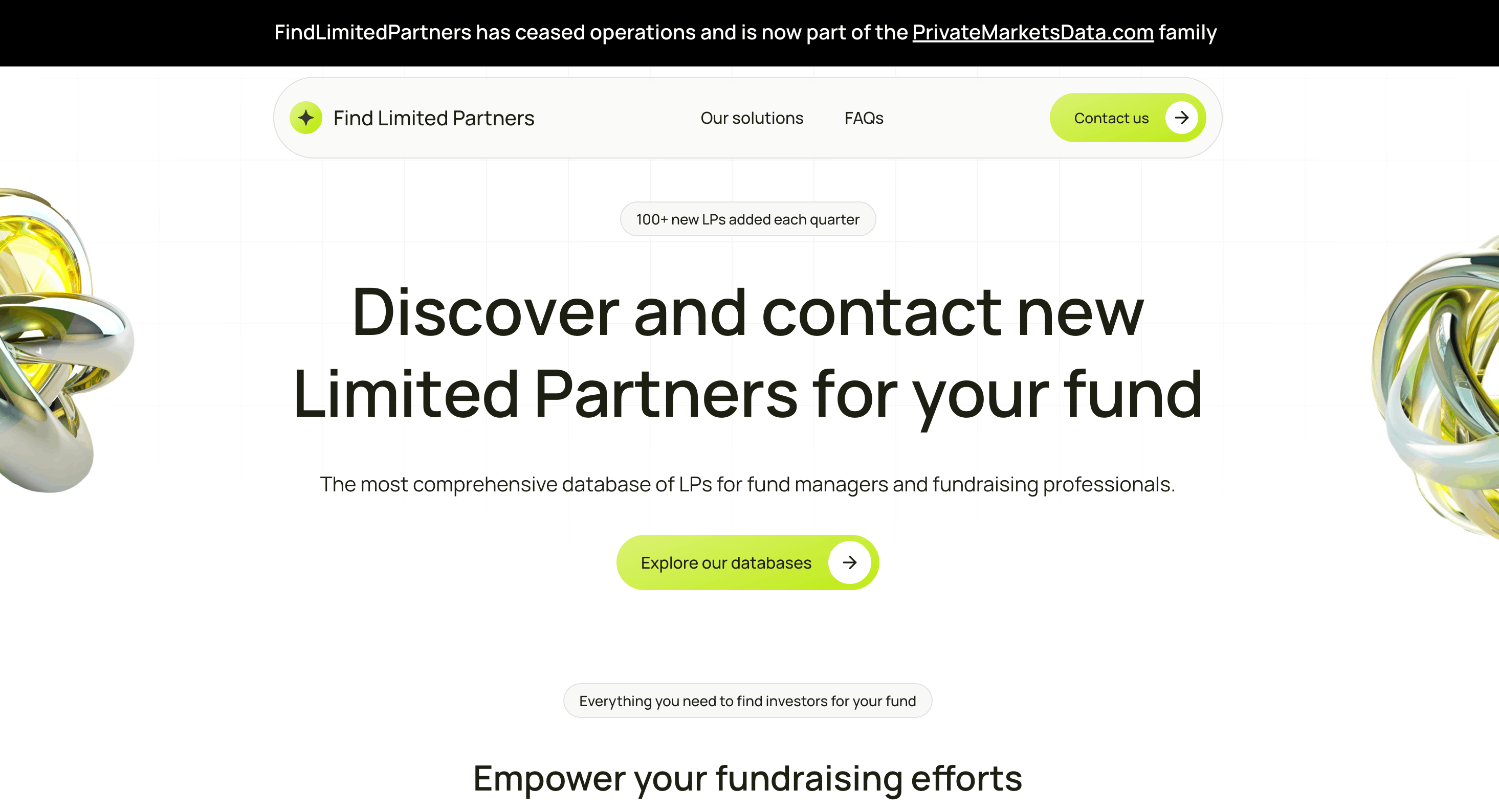
FindLimitedPartners is very straightforward: filter for the type of LP you want, pull a list, and start reaching out. The emphasis is clearly on contactability —you’re getting emails, LinkedIn profiles, and enough context to make the list usable without a ton of extra digging.
It’s especially useful early on, when you’re still trying to answer: who should I even be talking to?
What it doesn’t try to do is manage the rest of the process. There’s no real layer for tracking conversations or structuring your pipeline, so it tends to plug into whatever system you’re already using.
Coverage: Broad mix, with solid representation of family offices and smaller allocators
Strength: Fast list building with usable contact data
Limitation: No built-in system for managing outreach or follow-ups
Workflow fit: Early-stage sourcing → then export into a CRM or spreadsheet
Affinity — Your Network, Mapped and Searchable
Best for: Managers who already have meaningful relationships in the ecosystem
Pricing : ~$2,000–$10,000+ / year (depending on seats + integrations)
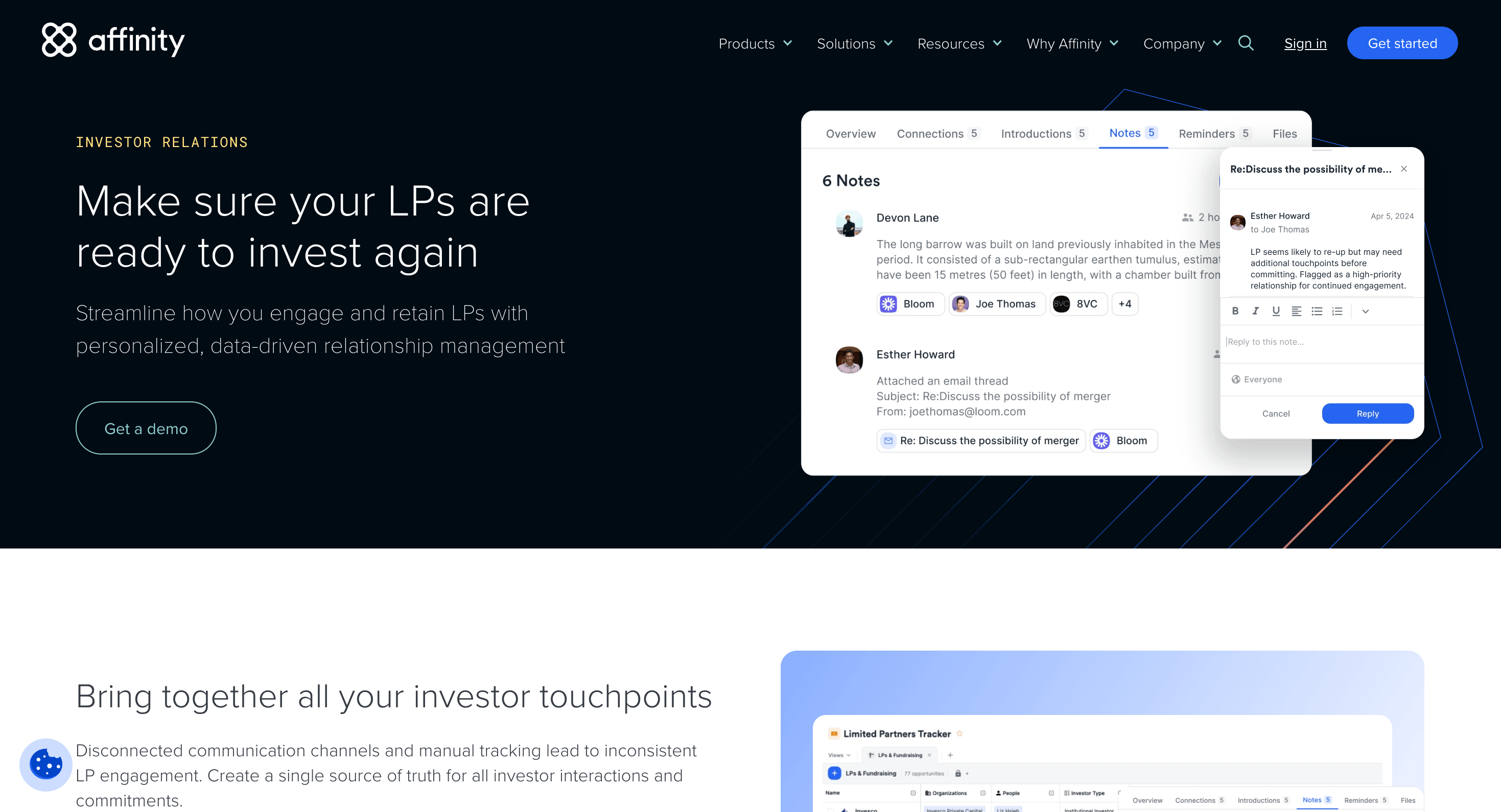
Affinity flips the usual approach. Instead of asking “who should I reach out to?”, it starts with “who do you already know or who can get you there?”
It automatically maps your email and calendar data to build a live graph of your relationships. Over time, you start to see patterns you wouldn’t catch manually, such as shared connections, overlapping touchpoints, and people you’ve interacted with indirectly.
For some managers, that’s the entire strategy. Warm intros outperform cold outreach, and Affinity helps you find them faster.
If you don’t have much of a network yet, though, it can feel pretty quiet since there’s no built-in engine to expand your universe. You’re working within what you (or your team) already bring in.
- Coverage: Your network and second-degree connections
- Strength: Surfaces warm intro paths automatically
- Limitation: Doesn’t help much with net-new LP discovery
- Workflow fit: Relationship-driven fundraising vs outbound-heavy strategies
Dealroom — See Where Capital Is Actually Flowing
Best for: Managers trying to understand where they fit before building a target list
Pricing : ~$15,000–$20,000+ / year
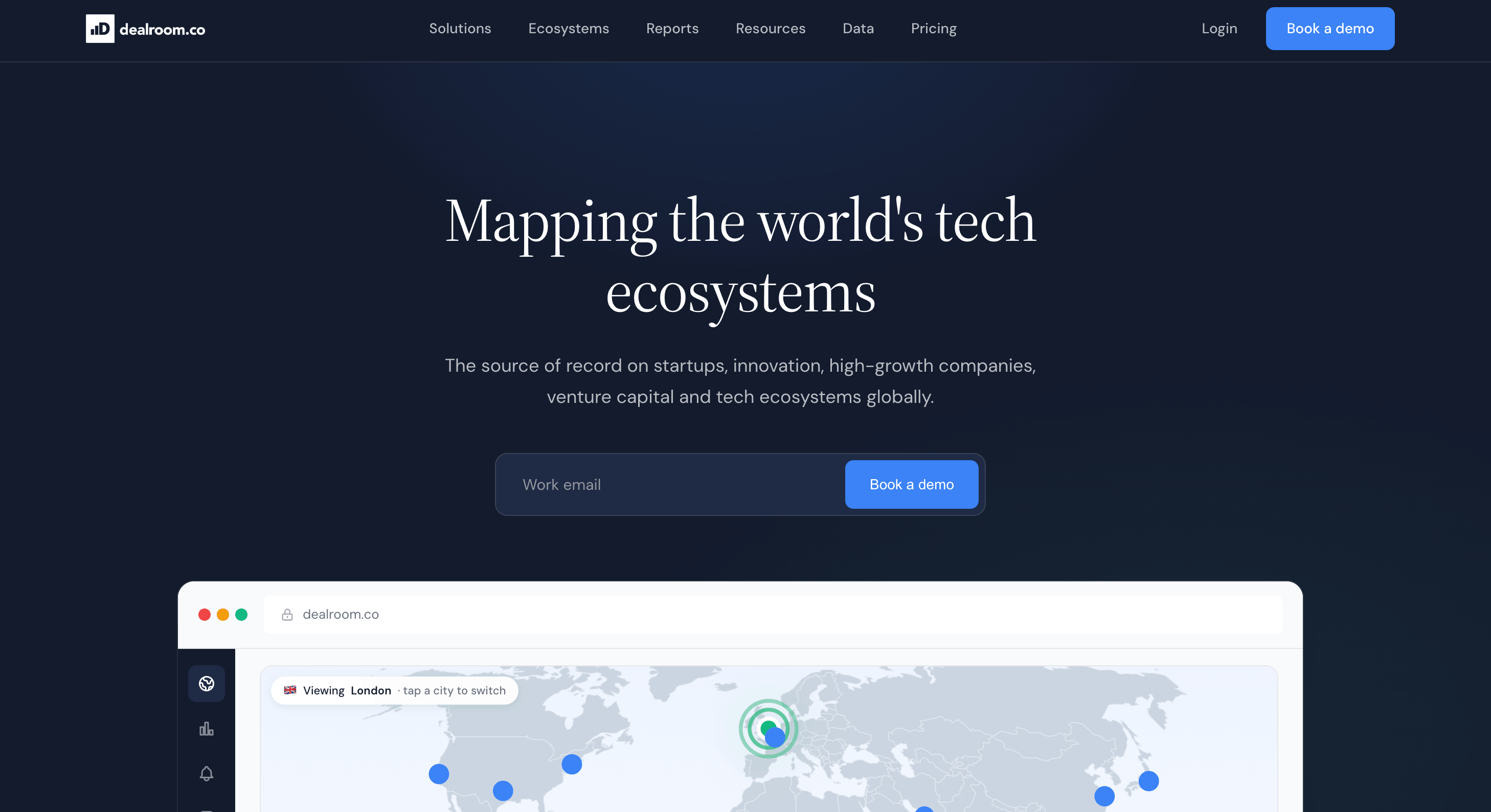
Dealroom is less about individual LPs and more about the bigger picture. It’s strong when you’re zooming out, looking at sectors, regions, and how capital is moving across the ecosystem.
You can use it to reverse-engineer your strategy a bit. Which cities are seeing the most activity in your category? Which investors keep showing up in similar deals? Who’s consistently backing funds in your space?
It’s helpful early in the process, when you’re still shaping your narrative and figuring out where you sit in the market. You come away with a clearer picture of the landscape, but not necessarily a ready-to-use outreach list.
- Coverage: Broad across startups, investors, ecosystems, and funding activity
- Strength: Strong market-level insights and ecosystem mapping
- Limitation: Not built for direct LP sourcing or outreach
- Workflow fit: Strategy and positioning before active fundraising
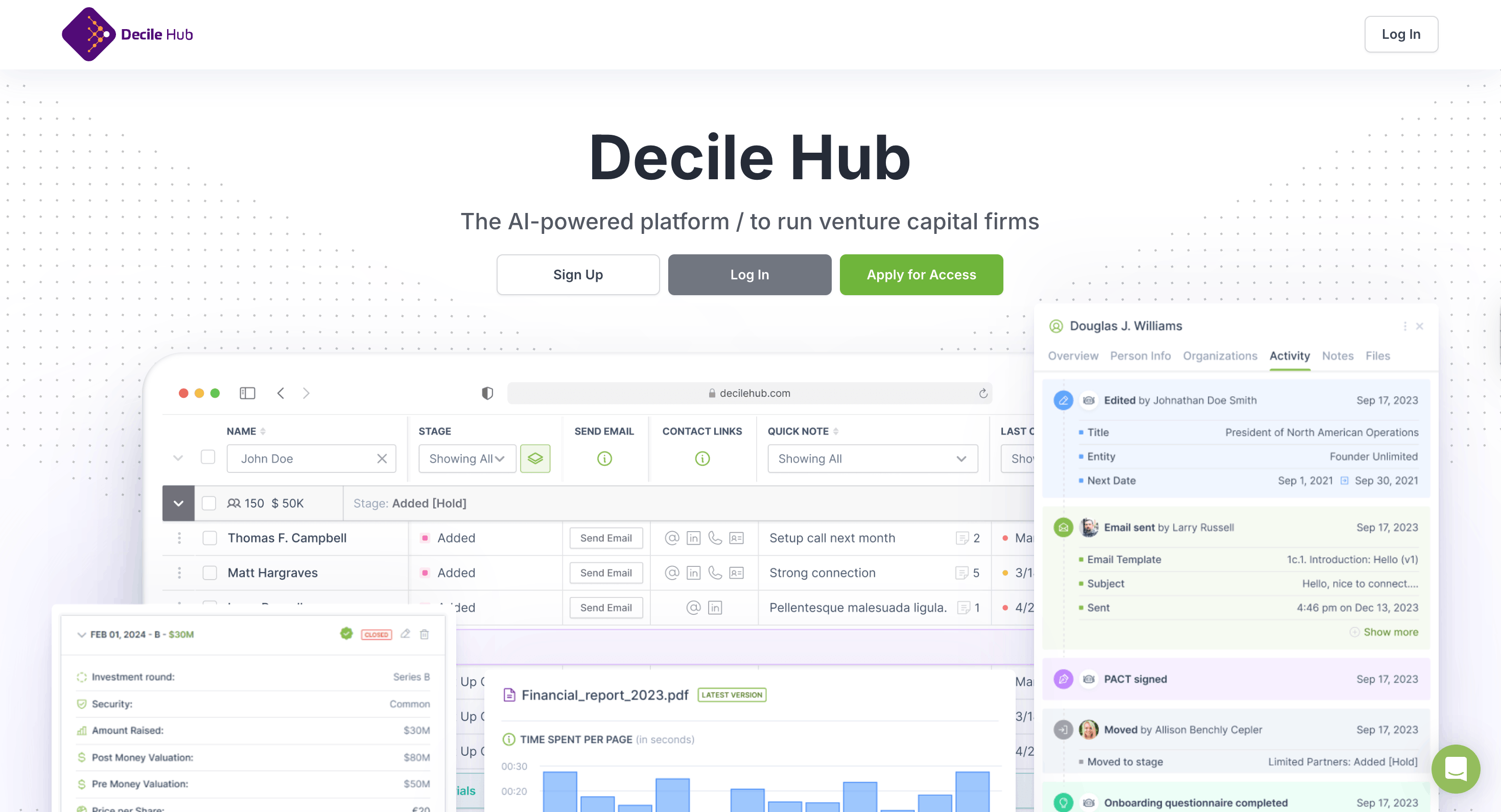
Decile Hub — A Structured Path for First-Time Fund Managers
Best for: First-time managers who want guidance, not just tools
Pricing : Often bundled with programs; ~$5,000–$15,000+ / year equivalent
Decile Hub feels closer to a program than a standalone product. It bundles together CRM functionality, LP tracking, and a set of fundraising frameworks that walk you through the process step by step.
That structure can be valuable if you’re raising your first fund and don’t yet have a system. Instead of figuring everything out yourself, you’re working within a predefined approach that’s been used by other emerging managers.
At the same time, that structure can feel a bit opinionated. If you already have your own process (or want more flexibility in how you run things), it may feel less like a tool and more like a system you’re expected to follow.
- Coverage: More focused on process and tracking than deep LP data
- Strength: Combines tools with guidance and fundraising frameworks
- Limitation: Less flexible and less data-heavy than standalone platforms
- Workflow fit: First-time managers who want a structured approach
Intralinks — Built for When LPs Start Asking for Documents
Best for: Managing diligence, documents, and LP communications at scale
Pricing : Fully custom (can range from a few thousand to tens of thousands, depending on usage)
Intralinks shows up later in the fundraising process.
It’s for what happens once conversations are already in motion. You’re sharing materials, managing sensitive documents, and responding to diligence requests. That’s where it fits.
The platform is built for security and control. Think data rooms, permissions, audit trails. Everything you’d expect when you’re dealing with institutional LPs and large checks.
For most emerging managers, it’s not the first tool you reach for. But at a certain point in the process, especially with more formal LPs, something like this becomes necessary.
- Coverage: Not an LP database (focused on documents and investor communication)
- Strength: Secure data rooms and institutional-grade workflows
- Limitation: Doesn’t help with sourcing or targeting LPs
- Workflow fit: Mid-to-late stage fundraising (diligence and closing)
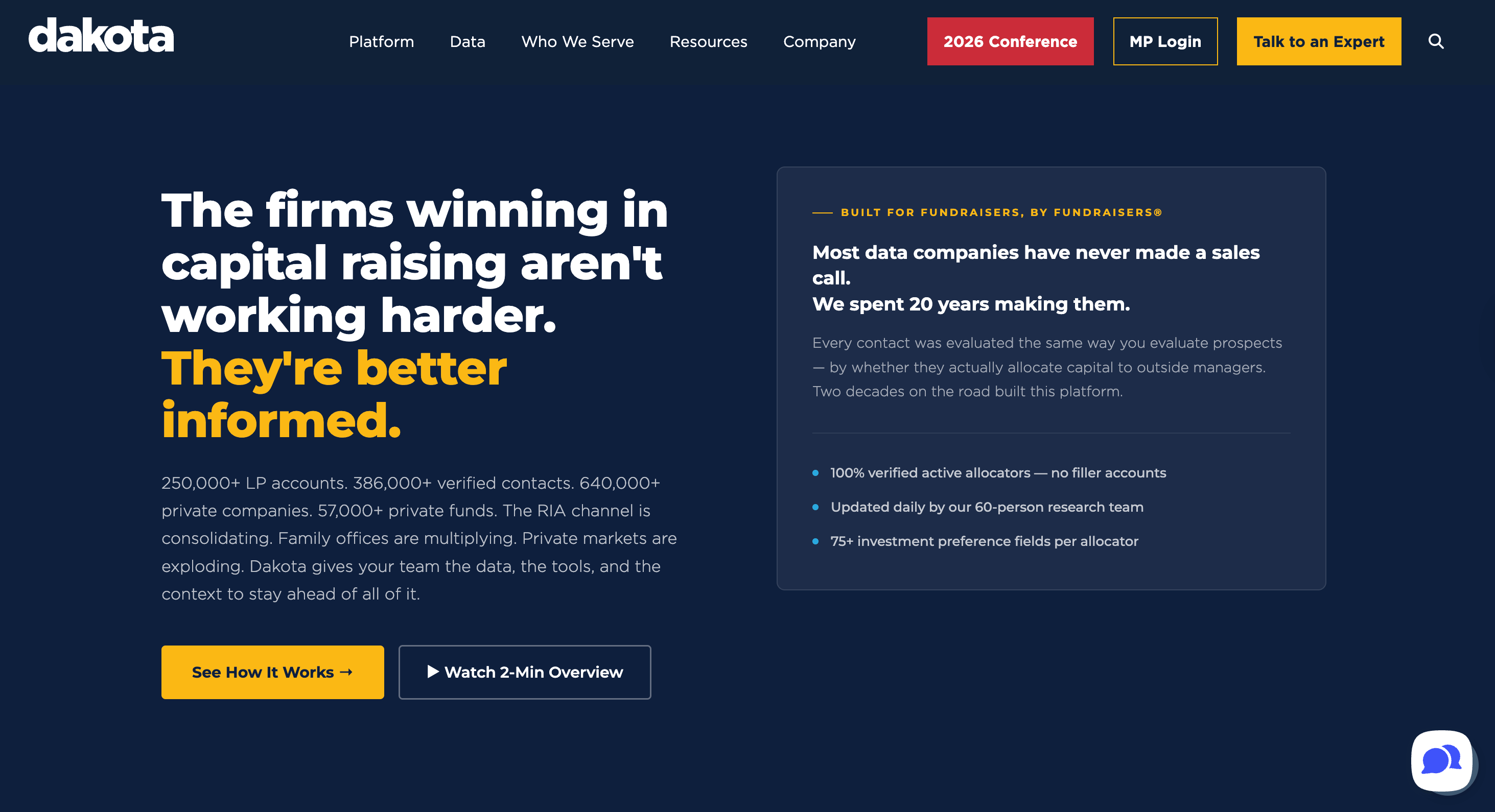
Dakota — A Smaller Universe, But More Signal
Best for: Managers who prefer warm, active LP signals over massive datasets
Pricing : ~$5,000–$15,000 / year
Dakota takes a different approach from the big data platforms. Instead of trying to map the entire LP universe, it focuses on a smaller, more engaged set of investors. Particularly those signaling interest in new opportunities.
That changes how you use it. You’re not digging through thousands of profiles trying to guess who might be a fit. You’re starting from a group that’s already leaning in, then working those relationships more directly.
The tradeoff is coverage. It’s not meant to be exhaustive, and if your strategy depends on reaching a very broad or global LP base, you’ll likely need to supplement it.
- Coverage: Smaller, more curated LP base with active interest signals
- Strength: Emphasis on engaged LPs and relationship-driven outreach
- Limitation: Not a comprehensive global dataset
- Workflow fit: Targeted fundraising with a focus on signal over scale
LP Database FAQs
What is an LP database?
An LP database is a tool that helps fund managers identify and research potential limited partners. It typically includes information on who they are, what they invest in, and how to reach them.
In practice, though, not all LP databases are the same. Some are built for deep research (allocation history, fund performance), while others are more focused on helping you actually build a list and start outreach.
How do emerging managers actually find LPs?
Emerging managers often use a mix of sources to find LPs, including:
- existing relationships
- warm intros
- cold outreach
- prior investors
The rest comes from building targeted lists using databases, then reaching out directly. Most emerging managers end up combining a few tools (one for sourcing, another for tracking, sometimes another for outreach) just to cover the full process.
Are LP databases worth it for a first-time fund manager?
It depends on how you’re approaching your raise.
If you already have a strong network, you may rely more on intros and use a database to fill gaps. If you’re starting from scratch, having a way to quickly identify and contact relevant LPs can save a significant amount of time.
What’s the difference between platforms like Preqin and newer LP tools?
Platforms like Preqin are built around institutional data, such as allocation history, fund performance, and long-term LP behavior.
Newer tools tend to focus more on usability:
- faster filtering
- better contactability
- lightweight workflows
They’re less about analyzing the market and more about helping you act on it.
Can you raise a fund without using an LP database?
Yes, but it will limit your ceiling.
If your network is strong enough, you can get pretty far through intros alone. Most managers, though, reach a point where they need to expand beyond their immediate circle.
That’s where LP databases come in. They help you turn fundraising from a closed network into something you can actively build and scale.
Find LPs with LP Navigator
At some point, every raise hits the same wall.
You’ll map out your initial network, have a few conversations, maybe even build a rough list. However, maintaining momentum starts to become difficult. New targets, follow-ups, tracking who’s where… it all adds up quickly.
That’s really where LP Navigator fits.
Instead of splitting your process across multiple tools, it brings the core pieces together:
- a database of LPs you can actually reach
- filters to narrow down the right targets quickly
- a larger platform to track outreach and conversations as they progress
It’s especially useful if you’re focused on the groups most first-time managers end up spending the majority of their time with (family offices, HNWIs, and other emerging allocators).
It’s not trying to replace institutional data platforms or become a full research layer. The focus is much more practical: helping you build a pipeline, start conversations, and keep things moving without unnecessary friction.
If you’re in the middle of a raise, or about to start, having everything in one place tends to make a bigger difference than having the most complete dataset.
You can explore LP Navigator and start building your list in minutes.
Access the Right LPs, Without the 5-Figure Price Tag
Build a targeted LP list, get contact info or intro paths, and dive into outreach for just $300/month.



![12 Best Startup Financial Model Templates [Free & Paid]](https://d1pnnwteuly8z3.cloudfront.net/images/177302d9-3657-45b7-ac9d-acf801d83a74/019fadd2-2388-77a4-a43e-6c44f536d546.jpg)